
“What causes rust?” is a popular question among homeowners, contractors, and users of steel structures in general. This issue rusty steel not only affects aesthetics but also reduces strength, lifespan, and safety of the structure directly. Many people understand that rust is caused solely by “water or rain,” but in reality, rust results from several contributing factors, including air, humidity, and environmental conditions such as salt spray or pollution. Additionally, the choice of which rust-resistant paint to use is also a crucial factor that impacts long-term protection. This article will comprehensively explain everything from
- the causes of rust
- types of rust (Red Oxide / Gray Oxide)
- professional prevention methods
- techniques for selecting the right paint for actual work
What causes rust?
Rust is the result of a chemical reaction known as Oxidation which occurs from the combination of three main components:
- Iron
- Oxygen
- Water or moisture
When all three come together, they form “iron oxide,” commonly known as rust
To explain simply,
- when iron comes into contact with air, it begins to react
- with water/moisture which accelerates the reaction.
- Time passes Rust occurs
Factors that cause steel to rust faster
- High humidity Areas with frequent rain or standing water
- Salt spray (coastal areas) Causes rust to form much faster
- High temperature The hotter it is, the faster the reaction
- Damaged steel surface Such as scratches or peeling paint
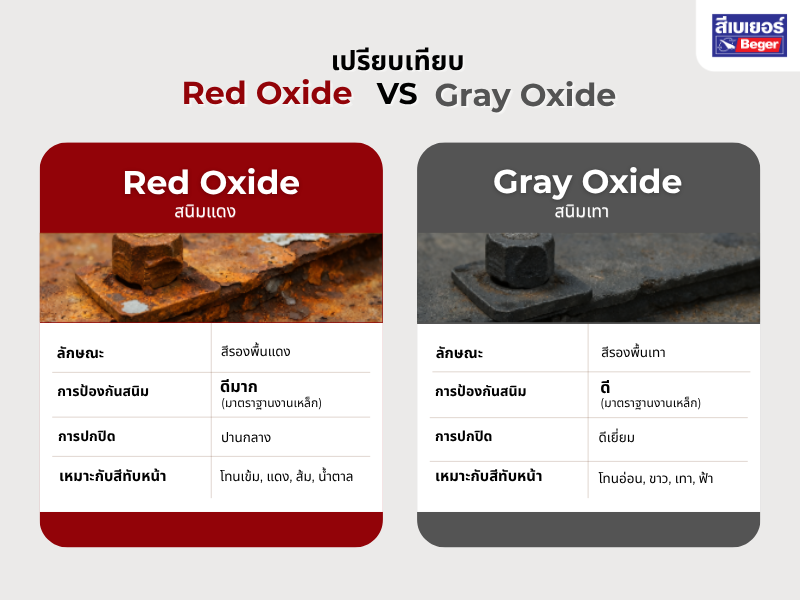
Gray Oxide and Red Oxide: What are they?
Rust is not just one type; generally, in steel work, two main types are discussed
Red Oxide (rust red) Is the most commonly found rust, characterized by a reddish-brown color
Properties:
- Severe corrosion
- Causes steel to decay and become brittle
- Often occurs in areas with high moisture or water
Gray Oxide (rust gray) Is another type of oxide, characterized by a gray or black color
Properties:
- More stable
- Occurs under specific conditions, such as heat
- In some cases, it helps slow down corrosion
Effective rust prevention methods
The best rust prevention is “to keep steel from direct contact with water and air”
Commonly used methods in practice
1. Apply a coating paint to help prevent moisture and oxygen
2. Use rust-resistant primer to add a protective layer
3. Choose a color suitable for the environment For example, outdoor work should withstand sun and rain
How to choose premium grade steel paint?
Essential properties
- Truly rust-resistant (Anti-corrosion) Reduces oxidation
- Good adhesion Prevents water penetration
- Weather resistant Sun, rain, humidity
- Reduce steps with 2IN1 products Minimize mistakes from multiple coats
What are BegerShield GRIPTECH 2IN1 and BegerShield GRIPTECH 2IN1 Aqua? How are they different?
Currently, there are combined paints that include rust-resistant primer + topcoat” in one can.
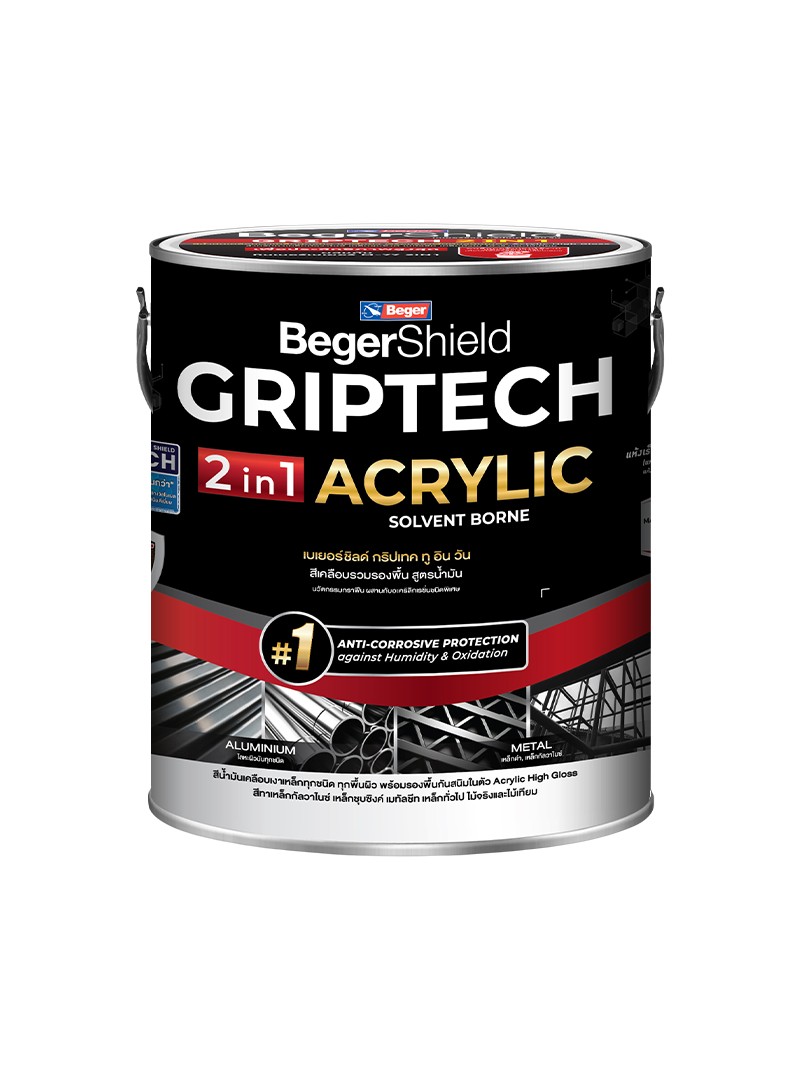
BegerShield GRIPTECH 2IN1 (oil-based formula)
- Strong, durable color film
- Suitable for outdoor and heavy-duty work
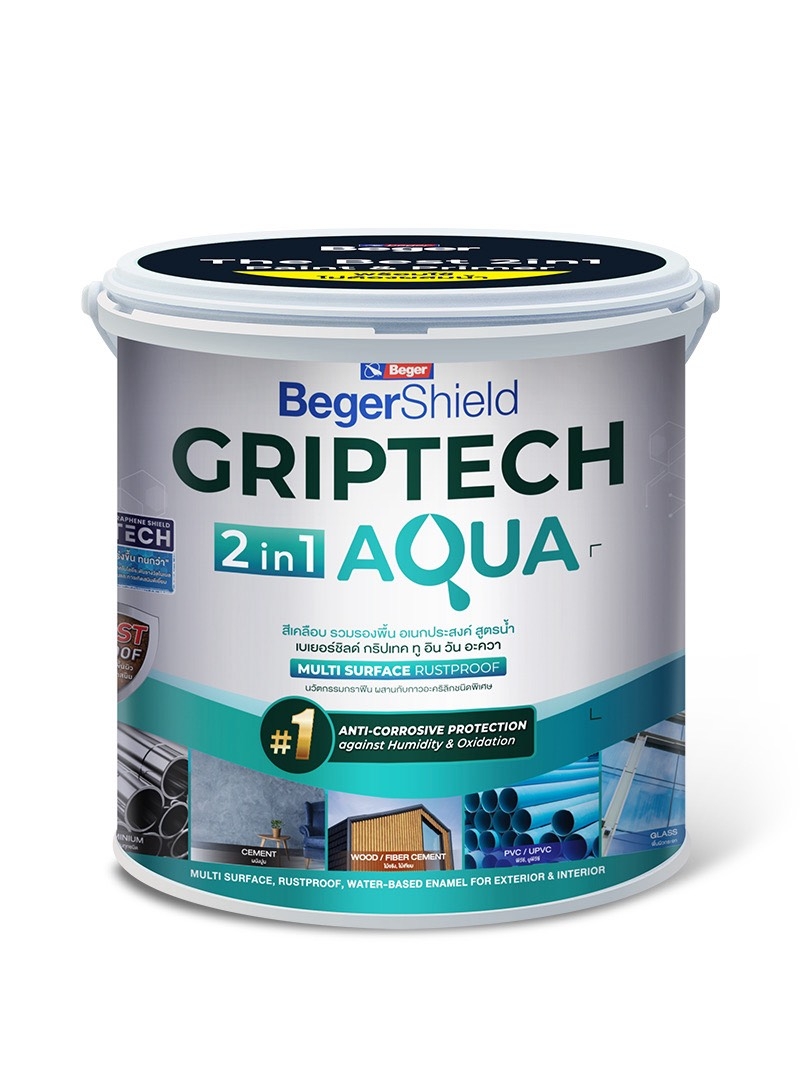
BegerShield GRIPTECH 2IN1 Aqua (water-based formula)
Highlights:
- Mild scent, easy to use
- Quick-drying, saves time
- Reduces impact on users
- Suitable for indoor and enclosed areas
Ideal for:
- Steel structures inside the house
- Renovation work
- Areas that require odor reduction
From all of this, it can be seen that rust occurs from the reaction between steel, oxygen, and moisture, which can easily happen in general weather conditions, especially in areas with high humidity or near the sea, causing steel to corrode faster if there is no proper protection. Additionally, rust has several forms, such as Red Oxide (red rust) which is highly corrosive, and Gray Oxide (gray rust) which is more stable. Understanding the types of rust will help in selecting the right protection method. In terms of prevention, choosing to use high-quality anti-rust paint for steel is considered one of the most effective methods, especially paints that have good adhesion, weather resistance, and can reduce work steps, such as 2IN1 type paints that combine primer and topcoat in one. Therefore, if you want to extend the lifespan of steel in the long term, you should start by understanding the causes of rust, selecting appropriate prevention methods, and using quality materials from the beginning.
Product Recommendations
|
|
|
FAQ Frequently Asked Questions about Rust
Q1: Can rust occur from water alone?
A1: No, both water and oxygen are required.
Q2 : Can rust-inhibiting paint be applied over rust?
A2 : Yes, but you should remove the rust first for the best effectiveness.
Q3 : How long does rust-resistant steel last?
A3 : It depends on the environment and the quality of the paint used.