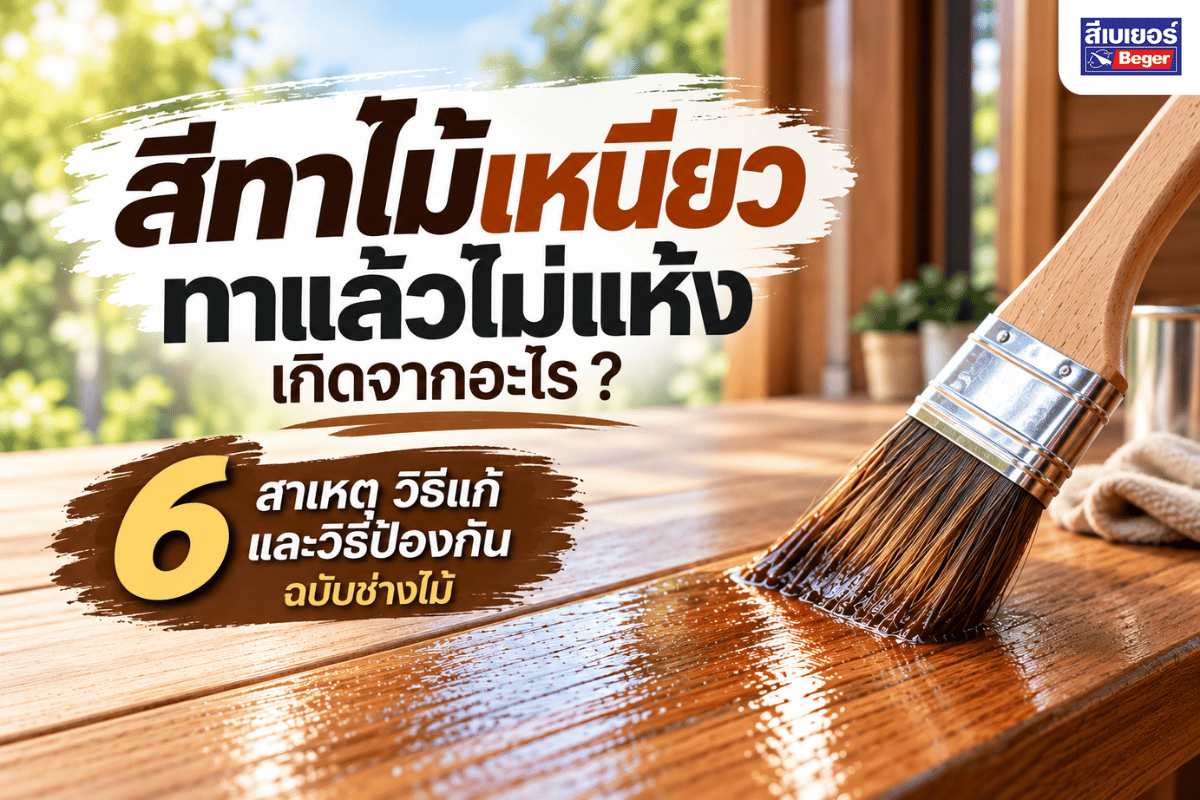
Wood paint that becomes sticky, feels tacky to the touch, or does not dry even after several days can be caused by 6 main reasons: excessive moisture in the wood, humid weather/rain while painting, applying too thick a coat or not waiting for the previous coat to dry, using an incorrect paint formula for the job, natural resins and oils in certain types of wood, and degraded paint or incorrect mixing ratios. The good news is that if the stickiness is not severe, it can often be resolved without completely stripping the paint. This article checks each cause step-by-step, along with solutions based on the severity of the symptoms, and prevention methods before opening the paint can, especially in the hot and humid climate of Thailand.
Why is the wood paint sticky and not drying? Check these 6 causes first.
1. Excessive moisture in the wood
New wood, wood that has just been rained on, or wood stored in a damp place often has accumulated moisture inside. When painted, the moisture cannot evaporate, causing the paint film to not dry completely and remain sticky. General woodwork standards recommend that wood moisture should be below about 15% before painting. A simple way to check if you don’t have a moisture meter: the wood surface should not feel cold and damp, and wood that has just been rained on should be left in a shaded, breezy area for at least 2–3 days in good sunlight.
2. Painting during humid weather or rain
High relative humidity slows down the evaporation of solvents and water in the paint significantly. The film may appear to be “dry” on the surface, but it remains sticky inside, especially when painting wood during the rainy season when rain may fall before the paint sets. The safest time to paint is between 9:00 AM and 3:00 PM on clear days.
3. Applying too thick a coat or not waiting for the previous coat to dry
Impatience is the enemy of woodwork. Applying a thick single coat or painting over the first coat before it is fully dry causes the top layer to dry first while trapping moisture inside. The result is chronic stickiness and wrinkling. The rule is to apply thin coats multiple times, allowing the recommended drying time according to the paint label (generally 4–6 hours per coat for oil-based formulas, and faster for water-based formulas—refer to the actual numbers on the label/TDS).
4. Using an incorrect paint formula for the job
Wood stain Water-based and oil-based formulas have different drying times and durability. Choosing the wrong type or timing can lead to stickiness. See the comparison table in the next section.
5. Natural resins and oils in the wood
The most overlooked cause: certain types of wood, especially oily woods like teak, contain oils and substances that interfere with the drying of the paint, causing the film to be sticky or spotty in certain areas. The prevention method is to wipe the surface with thinner before painting and use wood primer designed to block the natural oils specifically.
6. Degraded paint or incorrect mixing
Old paint stored for several years, leaving the can open, or mixing thinner/water incorrectly can all cause the drying agents in the paint to malfunction. Before using old paint, always mix it well and test it on a small piece first. If it remains sticky after 24 hours, switch to a new can. Don’t risk painting the entire job.
How to fix sticky wood paint? (Choose based on symptom severity)
| Severity Symptoms |
Characteristics | How to Fix |
|---|---|---|
| Sticky Slightly |
Surface is slightly sticky, does not leave a mark when pressed, applied no more than 2-3 days ago | Increase ventilation, turn on a fan gently (do not blow dust onto it), avoid usage, wait 24-72 hours. Most cases resolve on their own. |
| Sticky Moderate |
Sticks to hands, leaves fingerprints, has been several days | Wait until a full week in a well-ventilated area. If it improves slowly, continue to wait. Do not apply another coat under any circumstances. |
| Heavy Sticky/ Chronic |
Still sticky after more than 1 week, dust has settled on the surface causing discoloration | Must strip it off and redo. UseUni-Seal 9119or sand off the old film down to the wood. Address the root cause, then reapply correctly. |
Wood Stain: Water-Based vs. Oil-Based, Which One is Not Sticky?
| Header | Water-Based (Water- Based) |
Solvent-Based Formula |
|---|---|---|
| Drying Speed | Dries quickly, can be recoated soon Suitable for humid weather |
Dries slower, requires dry air and ventilation |
| Odor | Mild, works well indoors comfortably |
Stronger, requires good ventilation |
| Durability/Shine | Good durability, color does not yellow easily | Strong film, glossy, deep color, durable For outdoor use |
| Risk “Sticky” in humid air |
Lower than | Higher than if applied during high humidity |
| Suitable for | Indoor furniture work Rainy season work/humid areas |
Balconies, wooden fences, outdoor work exposed to heavy sun and rain (apply during dry weather) |
Choose paint formulas according to the weather conditions of each region
| Area/Condition Weather |
Main Risks | Guidelines for color selection and application timing |
|---|---|---|
| Northern/Western Region (Cold and Humid, Morning Fog) | High morning humidity causes slow drying of paint | Choose quick-drying wood stains, apply in the late morning or afternoon when fog has cleared |
| Central/Eastern Region (Very Hot, Strong Sun) | Paint film dries too quickly, trapping moisture inside and causing fading from UV light | Choose products that specify UV protection properties such as Beger WoodStain Supreme that withstands sun and rain, prevents mold and algae for over 5 years* Apply in thin layers, avoid applying in direct sunlight |
| Southern/Coastal Region (Frequent Rain, High Humidity) | Moisture accumulation in the wood and risk of mold growth | Before painting, allow wood to dry completely, choose wood stains with mold protection properties such as Beger WoodStain Supreme Semi-Gloss and should be applied on days without rain, allowing at least 2–3 hours for the paint to dry before rain starts |
*Reference properties from Beger WoodStain Supreme product information
How to paint wood without stickiness, according to carpenters (preventing from the start)
- Always check wood moisture first Below ~15% or air dry the wood in a shaded area with good airflow for 2–3 days after rain
- Surface Preparation and Cleaning Sand along the grain with fine sandpaper. Wipe off dust and grease. For oily woods, wipe with thinner.
- Apply wood primer according to the issue. Wood rubber for teak/ oily woods, anti-fungal for humid areas.
- Choose the formula suitable for the job. According to the regional chart above.
- Apply thinly in multiple coats, waiting for drying as per the label. Do not rush to finish in one coat.
- Choose the time between 9:00 AM – 3:00 PM on clear days. Avoid early morning, late evening, and rainy days.
- Test a small area before the entire job. Especially when using old paint or wood types that have never been painted. Wait 24 hours to see if it dries completely.
FAQ Frequently Asked Questions about Wood Paint
Q1: What causes wood paint to be sticky the most?
A1: Moisture, both in the wood (should be below about 15%) and in the air during application. The second cause is applying too thick a layer without waiting for the previous layer to dry, and the natural oils in oily woods like teak.
Q2: If the wood paint is sticky, how long should I wait for it to improve?
A2: If it’s slightly sticky and ventilation is increased, it usually improves in 24–72 hours. If it remains sticky after more than 1 week, it means the film will not dry on its own and must be stripped and redone.
Q3: Can I paint over sticky wood paint?
A3: Absolutely not. Painting over a sticky layer traps the problem under a permanent film. In the end, it will require deeper stripping and take more time than before. Address the sticky layer first.
Q4: Can I paint wood during the rainy season?
A4: Yes, if necessary, by choosing a quick-drying water-based paint, applying between 9:00 AM – 3:00 PM on a non-rainy day, allowing at least 2–3 hours for drying before rain, and ensuring the wood is truly dry, not just the surface.
Q5: Why does teak wood become sticky or have blotchy spots after painting?
A5: Because teak is an oily wood, it has natural oils that interfere with the drying of the paint. Always wipe the surface with thinner and apply wood rubber primer before painting.