

Imagine a material so thin it is almost invisible, yet stronger than steel by several times. It sounds like science fiction, but this material actually exists and is called “Graphene.” Graphene is hailed as one of the most promising materials of the future because it is not only thin or strong, but it also possesses many special properties that could change the world.
What is Graphene?
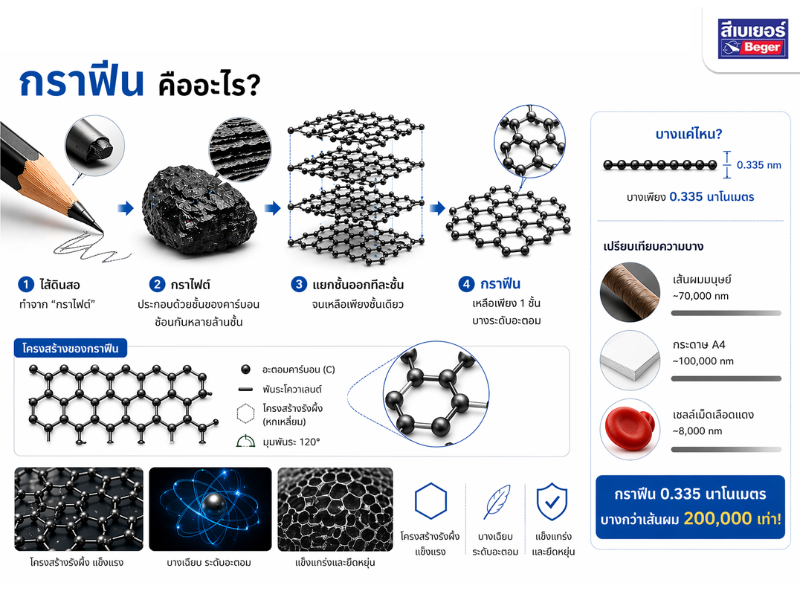
Graphene is a sheet of carbon that is only one atom thick, extracted from “graphite” (the core of a pencil), which typically consists of millions of stacked layers of carbon. Think of the pencil lead we use to write; that is graphite with carbon stacked in layers. When those layers are separated down to a “single layer,” you get graphene, which is only atomic in thickness (~0.335 nanometers) but has outstanding mechanical and thermal properties compared to conventional materials.
When was Graphene discovered, and who discovered it?
Graphene was first successfully isolated in 2004 by physicists Andre Geim and Konstantin Novoselov from the University of Manchester. The method they used was surprisingly simple: they used “scotch tape” to peel off layers of graphite repeatedly until they obtained a sheet of carbon just one atom thick. This discovery revolutionized the field of materials science and earned both of them the Nobel Prize in Physics in 2010.
Why is Graphene stronger than steel?
Graphene is strong because its nanoscale structure is a hexagonal lattice similar to a honeycomb, which evenly distributes force across the sheet. This hexagonal shape allows the bonds between carbon atoms to withstand stress exceptionally well. The numerical results often cited are:
| Mechanical Properties | Values of Graphene |
|---|---|
| Strength compared to steel | About 200 times stronger than steel |
| Tensile strength | Up to about 130 GPa |
| Elongation before breaking | Can stretch up to about 25% without breaking |
In simple terms, graphene is both “strong” and “flexible” at the same time, a property that most materials tend to have only one of.
Note on units: GPa (gigapascals) is a unit of measurement for stress or strength of materials, especially when referring to tensile strength before breaking.
How well does Graphene prevent permeation?
Even at an atomic thickness, graphene acts as an astonishing “protective shield,” effectively preventing the permeation of various substances. A standout point is that graphene can even block small gases like helium, which typically easily penetrate other materials. This is why graphene is used in applications requiring high levels of permeation resistance and moisture barrier.
How well does Graphene conduct heat?
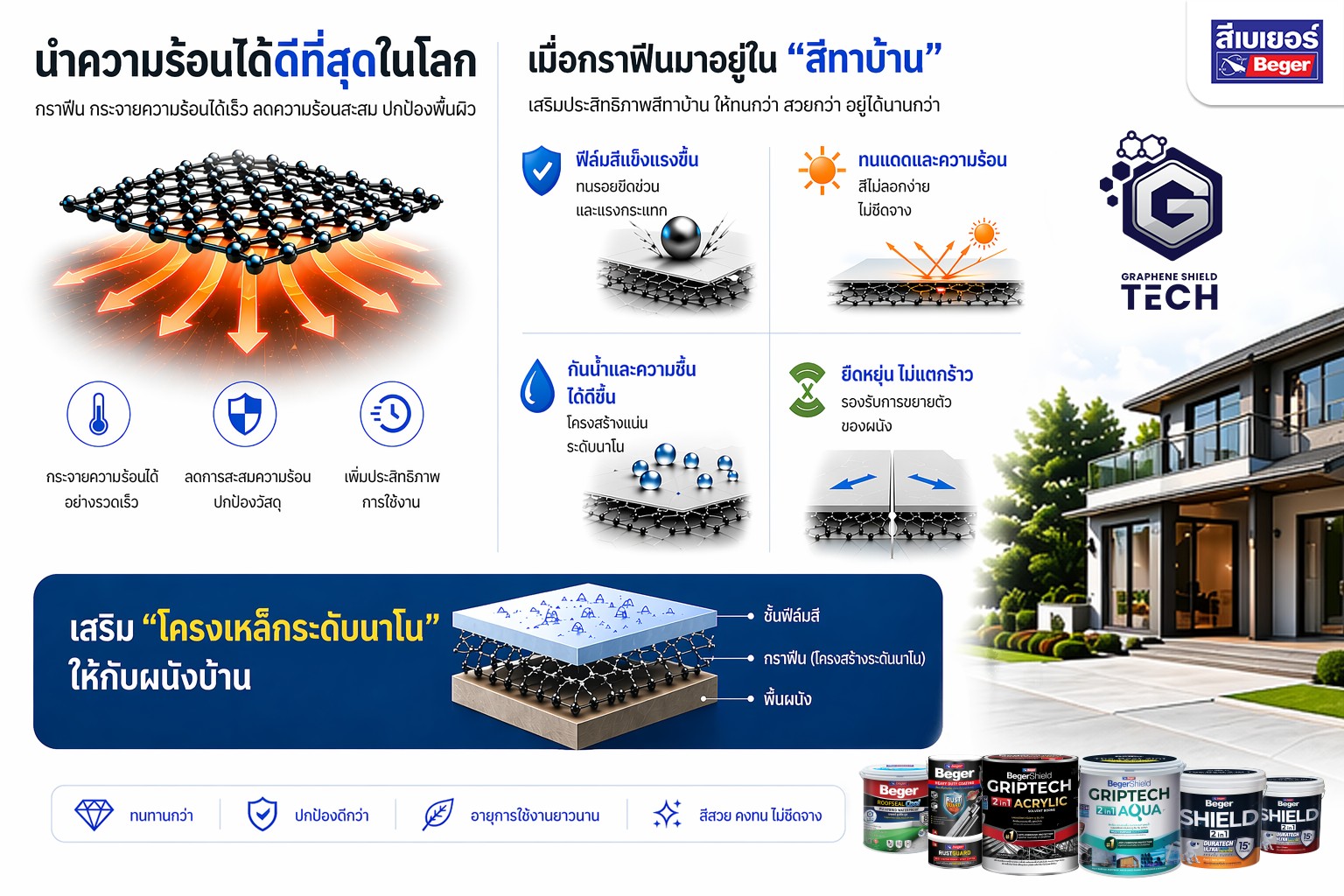
Graphene can conduct heat up to about 5,000 W/m·K, making it one of the best heat-conducting materials in the world.
To put it into perspective:
- It is about 2 times better than diamond.
- Better than copper used in electrical wires by about 10 times
This capability allows graphene to dissipate heat quickly, reducing localized heat buildup and helping to protect materials from heat damage.
What is Graphene Paint?
Graphene Paint is a house paint that incorporates graphene into the paint mixture to enhance the strength and performance of the paint film, making it more durable than regular paint. When graphene is added to the paint, its nano-structure acts like a “nano steel frame” that reinforces the paint film on the wall.
How is graphene house paint better than regular paint?
Graphene house paint helps make the paint film strong, water-resistant, sun-resistant, and reduces cracking, thus extending the lifespan of the walls longer than regular paint.
| Properties | Regular paint | Graphene house paint |
|---|---|---|
| Paint film hardness | Standard | Stronger, scratch and impact resistant |
| Water/moisture resistance | Adequate | Improved due to tight nano-structure |
| Sun/heat resistance | Peeling over time | Sun-resistant, color does not easily peel |
| Flexibility | Can crack when the wall expands | Flexible, accommodates wall expansion |
Recommended house paint products
|
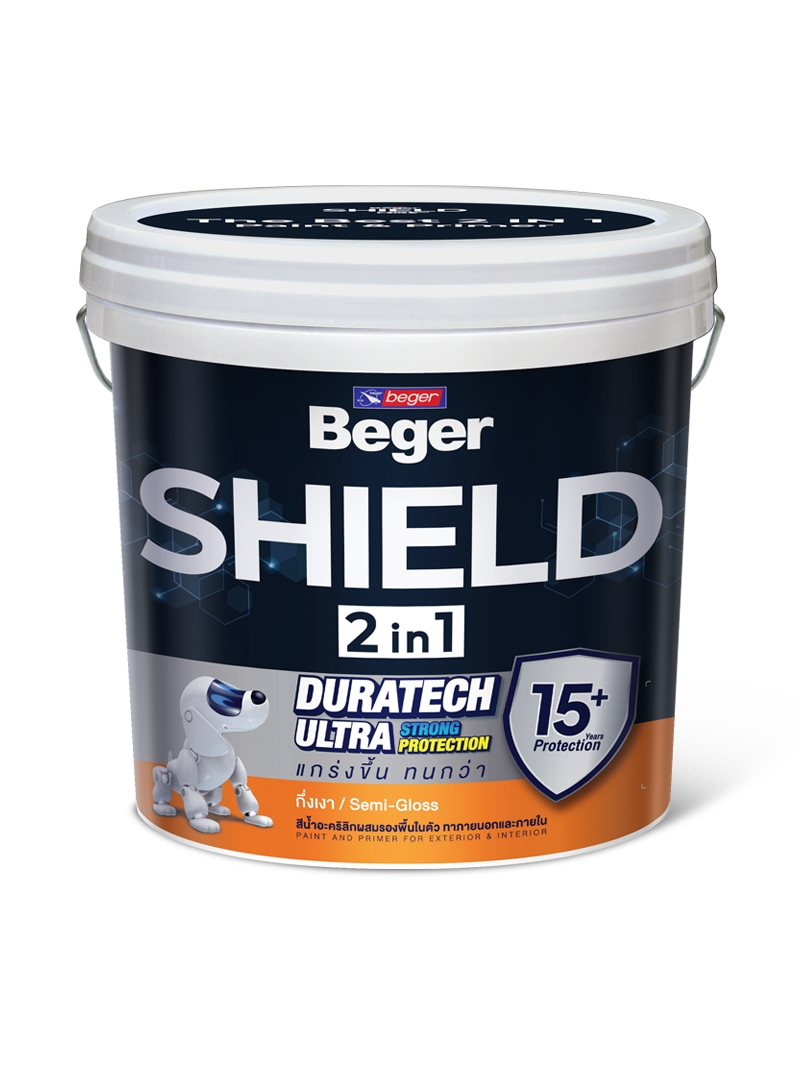
BegerShield 2In1 Semi-Gloss |
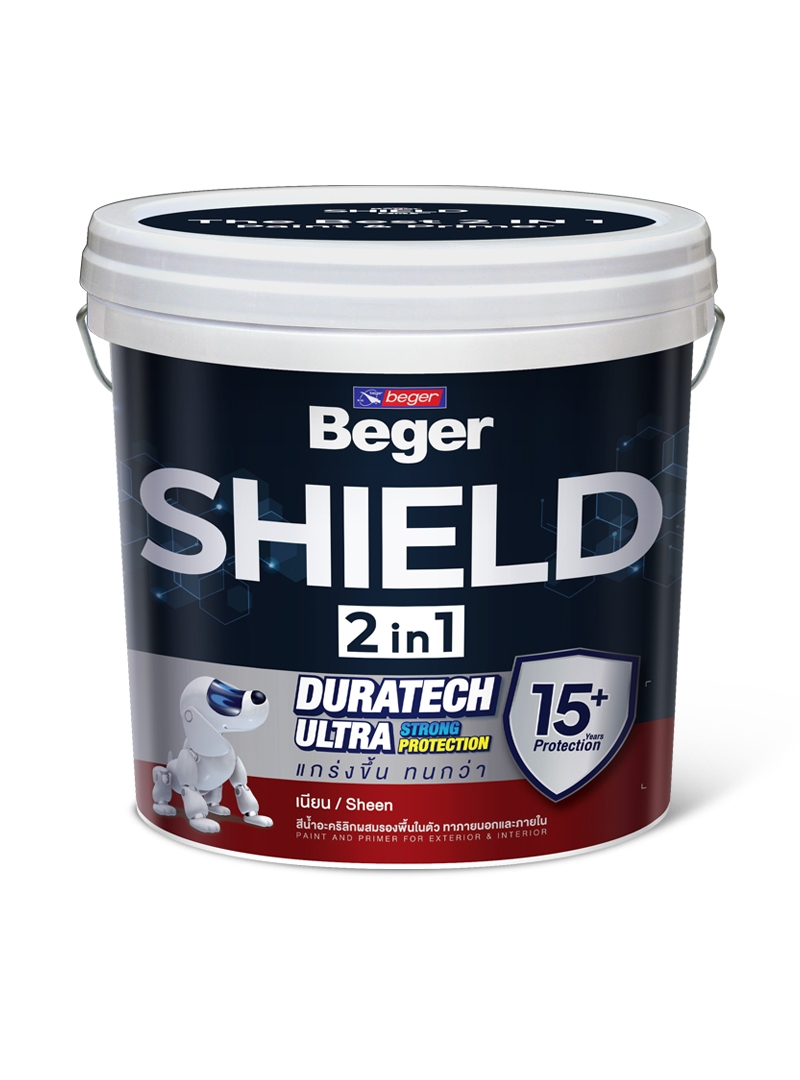
Beger Shield 2in1 Sheen |
FAQ Frequently Asked Questions about Graphene (Graphene)
Q1: What is graphene?
A1: Graphene is a material made of a single layer of carbon, about 0.335 nanometers thick, with a hexagonal structure similar to a honeycomb, making it extremely strong, even though it is about 200,000 times thinner than a human hair.
Q2: Why is graphene stronger than steel?
A2: Because its nanoscale structure is a hexagonal lattice that distributes force well, graphene is about 200 times stronger than steel, withstanding tensile strength of around 130 GPa, and it is flexible without breaking.
Q3: What are the outstanding properties of graphene?
A3: Graphene is strong and highly flexible, waterproof and gas-tight (even helium cannot pass through), and conducts heat very well at about 5,000 W/m·K, making it regarded as a material of the future.
Q4: What is graphene paint?
A4: Graphene paint is a house paint that incorporates graphene into the paint mixture to enhance the strength and performance of the paint film, making it more durable than regular paint.
Q5: How is graphene house paint better than regular paint?
A5: Graphene house paint has a strong paint film that is scratch-resistant, waterproof, and moisture-resistant, withstands sunlight and heat, does not peel easily, and is flexible to reduce cracking, thus extending the lifespan of the walls.
Graphene is a single-layer carbon material that is atomically thin but 200 times stronger than steel and has the best thermal conductivity in the world. From laboratory materials, graphene has now entered daily life, including in house paint that helps make walls more durable.