
The hot house cycle… that many people encounter but never realize it’s repeating itself The hotter the weather, the hotter the house becomes. When the air conditioner is turned on, the electricity bill skyrockets. Many people think this is a normal occurrence in the summer, but the truth is that what happens is the “hot house cycle,” which makes the house increasingly hot without anyone realizing it. If not addressed correctly, this cycle will continue to repeat every year.
What is the hot house cycle?
The hot house cycle is the accumulation and transfer of heat that occurs in a loop, starting from sunlight, with the following sequence:
- Sunlight accumulates heat on the roof and walls
- The heat gradually seeps into the house
- The temperature inside the house rises
- The air conditioner works harder
- The air conditioner releases hot air, accumulating around the house
The environment around the house becomes hotter, making the house even hotter than before. This cycle does not end in one day but accumulates and intensifies over time.
Why does the house “accumulate heat” more than expected?
Many people understand that heat primarily enters through the air or windows, but in reality, most of the heat enters the house through “walls and roofs.” The reasons are:
- Concrete and plaster walls, as well as roofing materials, have properties that accumulate heat.
- Certain types of house paint absorb energy from sunlight.
- Heat accumulates all day and is released in the evening.
The result is that even without sunlight, the house remains hot.
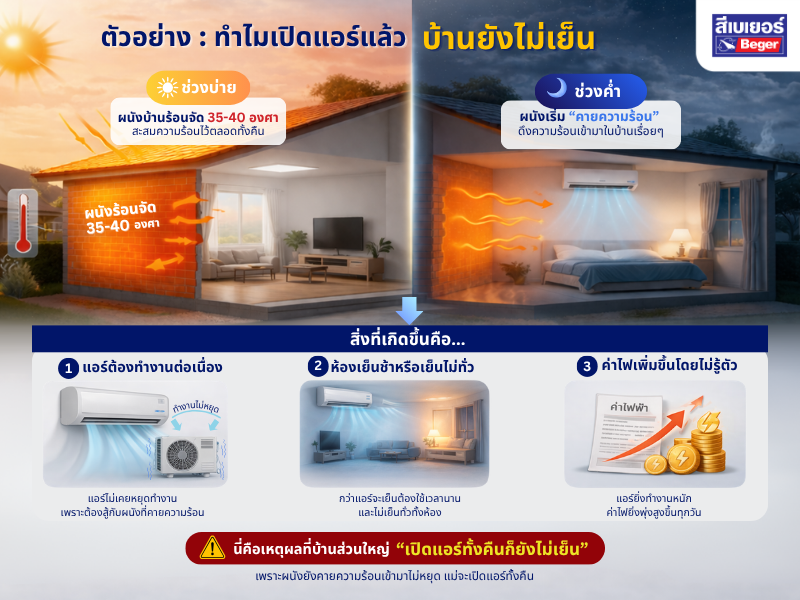
Real example: Why is the house still not cool even when the air conditioner is on?
In the afternoon: The walls of the house and the temperature under the roof can reach 35–40°C (while the outside temperature is only 30°C). This heat has been accumulated throughout the day.
In the evening: The walls and roof begin to “release heat” into the house.
What happens is:
- The air conditioner must operate continuously
- The cold room is slow or not evenly cooled
- Electricity bills increase without realizing it
And this is the reason why some homes “keep the air conditioner on all night but still feel uncomfortable”
Ways to reduce heat in the house (commonly done)
There are several methods to help reduce heat, such as
- Installing thermal insulation helps reduce heat from the roof, but it is costly
- Eaves and gable roof should be installed with ventilation openings
- Using curtains or sun films helps reduce heat from sunlight entering through the windows
- Planting trees around the house helps block sunlight and lower the temperature around the house
- Increasing ventilation helps heat escape from the house more quickly
Although these methods can help, most are still “addressing the symptoms”
To effectively solve the problem of a hot house, one must start at the “root cause”
If you look deeper, the root cause of the problem is the heat accumulated on the walls and roof of the house Therefore, the effective method is to reduce heat before it enters the house
To illustrate:
- Turning on the air conditioner Correct at the end note.
- Reduce heat from walls and roofs. Address the root cause.
When the root cause is addressed, the remaining problems will decrease accordingly.
Does the color of a house really affect heat?
The answer is “has a significant impact” because the paint on the house and the roof are the first surfaces to receive direct sunlight.
Example:
- Dark color High heat absorption
- Light color Reflects light better.
Special Technology/Innovation Reflects infrared radiation
Some types of colors (TIS 2514-2564 Thermal Insulation from Solar Radiation) Can:
- Reduce the surface temperature of walls and roofs.
- Reduce heat transfer into the house.
- Naturally cool your home down.
How effective is it really at reducing (temperature reduction, energy reduction)?
From testing in real homes, it was found that:
- The indoor temperature can drop by a maximum of approximately 6°C
- Reduce energy consumption from air conditioning by up to 32% per year
- Homes cool down faster and maintain coolness longer
Importantly, this result comes from “reducing heat from the source”
What is AeroTech technology?
AeroTech is a technology specifically designed to reduce heat accumulation, operating on the principle of REI technology as follows:
- R (Reflection) reflects heat radiation away from the walls
- E (Emission) helps walls release heat faster
- I (Insulation) resists heat or prevents heat transfer into the house
This concept has been applied in industries that require high temperature control, such as space technology. When adapted for homes, it effectively reduces heat.
An option for those looking to reduce heat in the long term
If you want to solve the problem of a hot house sustainably, you should choose materials or colors with the following properties:
- heat reflective
- reduce heat accumulation
- weather resistant
which are designed to directly lower wall temperatures and help reduce the workload of air conditioning in the long term.
A cooler home equals more comfort and sustainability
Reducing heat in the home not only impacts comfort but also helps:
- lower electricity bills in the long term
- reduce energy consumption
- reduce environmental impact
Stop your house from getting hot with Cool House Paint Thus, paint that helps keep the house cool is not just about “comfort” but about “efficient living/comfortable conditions.” A hot house is not only a result of the rising temperatures each day but also a result of the “heat accumulation cycle” that occurs repeatedly through the walls and roof, which gradually absorb and release heat into the house. This causes the air conditioning to work harder, increases electricity bills, and makes the coolness unstable. Therefore, the effective solution is not just to turn on the air conditioning or find temporary ways to reduce heat, but to reduce heat from the source, especially at the walls of the house, which are the main points of heat accumulation. When understood and addressed at the root, the house will become sustainably cooler, more comfortable, more energy-efficient, and truly help reduce environmental impacts in the long term.
Product Recommendations
|
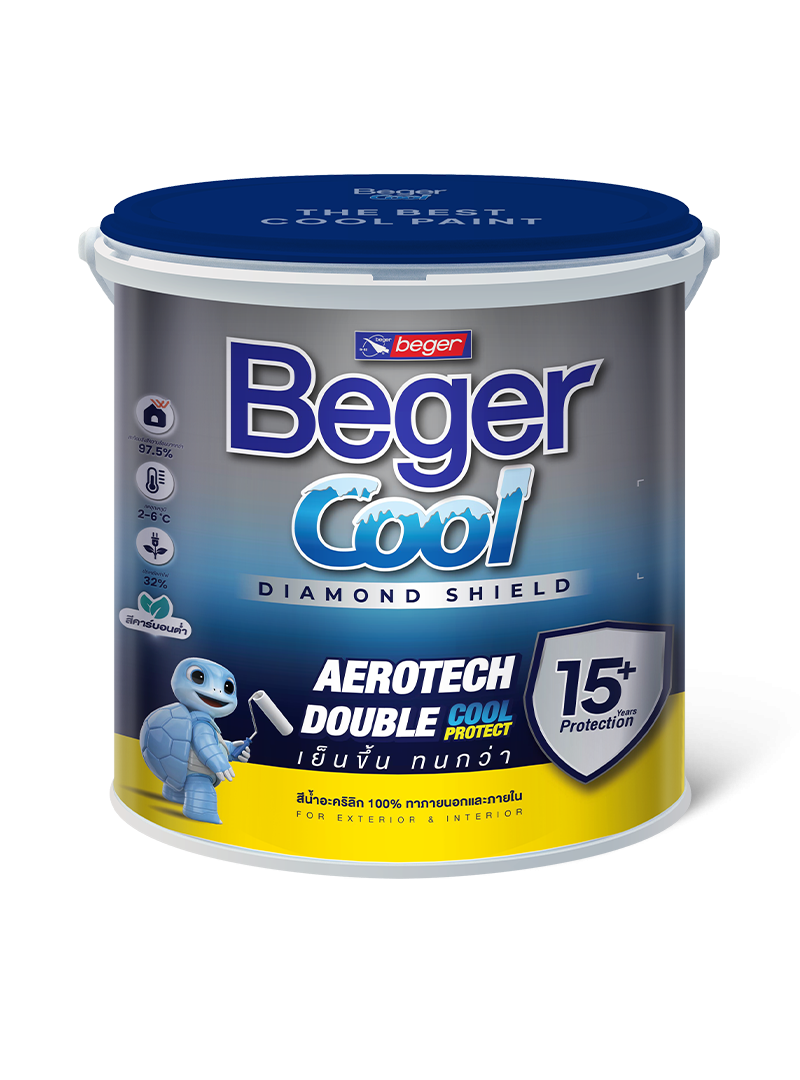
BegerCool DiamondShield 15 |
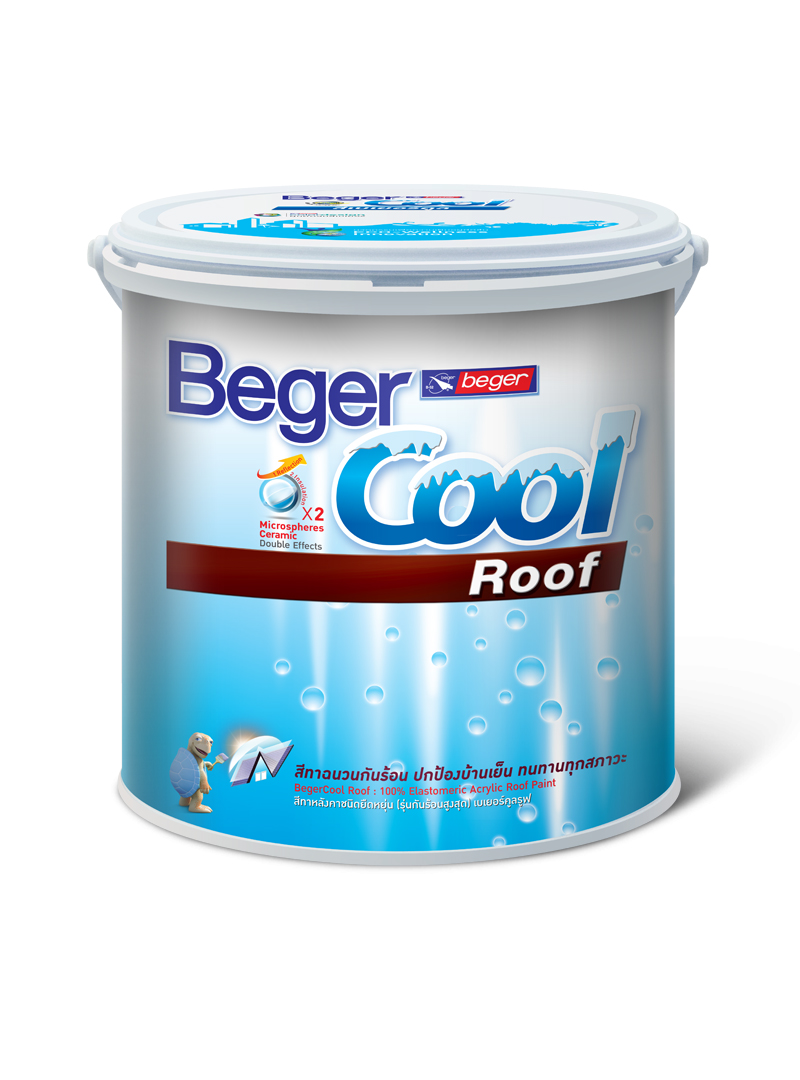
BegerCool Roof |
FAQ Frequently Asked Questions about Hot Houses
Q1: How can I effectively solve a hot house?
A1: You should start by reducing the heat entering the house, such as the walls and roof, as they are the main sources of heat accumulation. Addressing the root cause will help keep the house cooler sustainably rather than just relying on air conditioning.
Q2: Why is the house still not cool even with the air conditioning on?
A2: Because the walls of the house are still accumulating and releasing heat into the house, causing the air conditioning to work harder, resulting in uneven and slower cooling.
Q3: What are the main causes of a hot house?
A3: The main causes come from heat accumulation in the walls and roof, as well as materials that absorb heat and poor ventilation.
Q4: What are some cost-effective ways to reduce heat in the house?
A4: This can be done, for example, by using sun-blocking curtains, planting trees, improving ventilation, or choosing materials and colors that help reflect heat to lower the temperature inside the house.
Q5: Does house paint really help reduce heat?
A5: Certain types of paint can reflect heat and reduce heat accumulation on walls and roofs, helping to keep the house cooler and reducing the workload on the air conditioning.