
During a prolonged heatwave, in addition to affecting health, “heat accumulation in the home” is another factor that increases the risk of heat stroke unknowingly. Many may overlook that a hot and stuffy home can directly impact the body. Understanding warning signs, prevention methods, and reducing heat inside the home, such as choosing to use “cool house colors” is therefore important.
How is a hot house related to heat stroke?
A house with high temperatures and poor ventilation will cause the body to accumulate heat continuously. Even without being in direct sunlight, there is still a risk of heat stroke, especially at night when the house continues to retain heat. Reducing heat accumulation in the home is thus another important method of prevention.
Extreme heat increases the risk of sunstroke unknowingly.
When the body is exposed to heat or high temperatures for an extended period, the temperature control system works harder. If it cannot dissipate heat in time, it will result in abnormally high body temperatures, leading to heat stroke unknowingly, especially among those engaging in outdoor activities, the elderly, and those who drink little water.
5 warning signs before heat stroke
Observing symptoms from the early stages helps reduce the risk of severe conditions. Warning signs to watch for include:
- Headache, dizziness
- Nausea, weakness
- Abnormally high body temperature
- Skin that is hot, dry, or sweating abnormally
- Rapid heartbeat
If these symptoms are observed, one should rest and immediately lower body temperature.
4 ways to cope with extreme heat
Taking proper care of oneself effectively reduces the risk of heat stroke.
- Drink enough water regularly
- Avoid being in direct sunlight during noon to afternoon
- Rest in shaded areas or places with cool airflow
- Reduce outdoor activities, especially strenuous ones
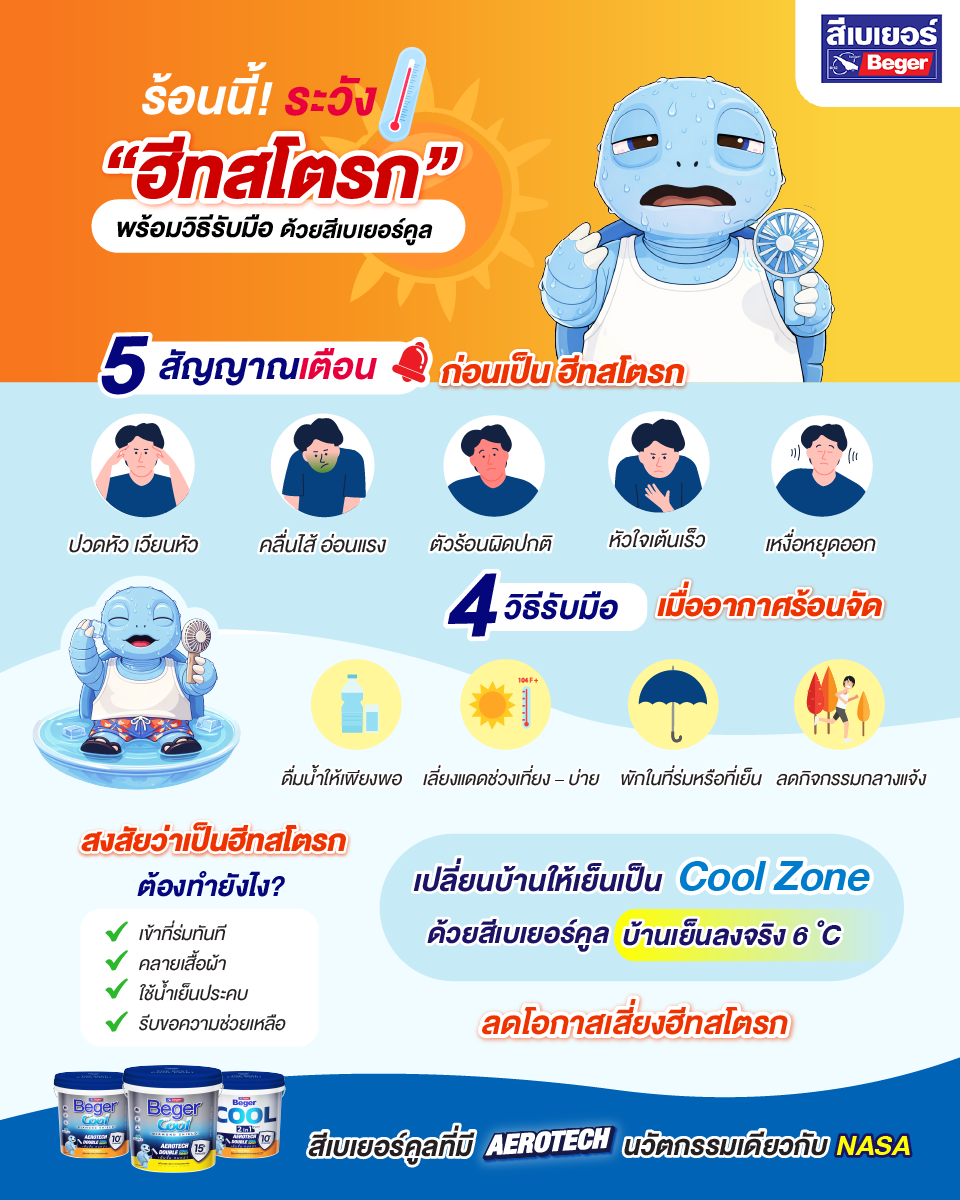
Suspect it might be heat stroke, what to do
If symptoms indicative of heat stroke begin to appear, action should be taken immediately.
- Get to a shaded or cool place as quickly as possible.
- Loosen clothing to reduce heat accumulation
- Use cold water to cool the body
- Quickly seek help or see a doctor as soon as possible
Do not let your home become hot, risking heatstroke
Transforming your home into a Cool Zone can be achieved by choosing “cool house colors” which are house paints that have the property of reflecting heat radiation, such as BegerCool DiamondShield 15, a low-carbon (eco-friendly) paint developed with AEROTECH innovation from world-class technology that helps reduce accumulated temperature on walls and effectively cools the home.
Key features include
- helping to reduce indoor temperatures by up to approximately 6°C
- reducing heat accumulation, preventing wall deterioration from heat
- helping save energy, reducing the workload of air conditioning units, or lowering electricity bills
- environmentally friendly with low-carbon technology
Heatstroke is a silent danger that can be prevented if one is aware of the warning signs and takes proper care of oneself, alongside creating a cool environment. Making a home a safe space from heat is not just about comfort but is truly about long-term health care. Choosing the right cool house color will help reduce heat accumulation and make the home a safe area from hot weather sustainably.
FAQ: Heatstroke and Reducing Heat in the Home
Q1: What is heatstroke and how dangerous is it?
A1: Heatstroke (Heatstroke) is a condition where the body temperature is abnormally high and cannot dissipate heat quickly enough. It can lead to severe symptoms such as unconsciousness or organ failure, so it is essential to take care and prevent it from the early stages.
Q2: Does a hot house contribute to the occurrence of heatstroke?
A2: A house with high temperatures and poor ventilation can cause the body to continuously accumulate heat, even when not in direct sunlight, thus increasing the risk of heatstroke, especially during extremely hot weather.
Q3: What is cool house paint and does it really help reduce heat?
A3: Cool house paint is a type of paint that has the property of reflecting heat from sunlight, helping to reduce heat accumulation on the walls of the house, thereby actually lowering indoor temperatures and making the home more comfortable.
Q4: Does using cool house paint help reduce the risk of heatstroke?
A4: While cool house paint does not directly prevent heatstroke, it can help reduce the heat inside the home, making the environment cooler, which is a crucial factor in reducing the risk of heatstroke.
Q5: Besides cool house paint, what other methods can help cool the home?
A5: This can be achieved by installing insulation, improving ventilation, using sun-blocking curtains, or planting trees around the house. However, choosing cool house paint is considered a cost-effective method with clear results.