
As the cost of living continues to rise, many people are beginning to feel the impact clearly. “Expenses are rising faster than ever.” Whether it’s the price of chicken eggs, the ingredients for cooking, or the rising costs of electricity and energy that increase almost all the time, what is happening is not just an increase in end prices, but reflects… The “production costs” that have increased since the upstream. Especially in the agricultural sector, which faces rising costs for animal feed, labor, and increasingly extreme heat conditions each year. When looking deeper, it becomes clear that the prices consumers pay today are actually the result of various accumulated costs behind the scenes. One of the key factors that is often overlooked is “Heat”
Why is heat a significant factor that drives up costs?
Heat accumulated under the roof does not only result in higher indoor temperatures but also directly affects both “productivity” and “costs,” especially in farms and agricultural greenhouses.
Examples of actual impacts include:
- Chickens eat less food. This results in a decrease in egg quantity.
- Pigs grow more slowly. It takes longer to raise them, increasing costs.
- Withered vegetables Uneven growth
These are “Hidden costs” That happens every day without many people noticing, and when accumulated over time, it becomes a significant cost burden without realizing it.
The main benefits of heat-reflective roof paint.
- Reduce the temperature inside buildings and greenhouses.
- Reduce energy consumption, such as air conditioning or fans.
- Enhance comfort for residents and pets.
- Help extend the lifespan of the roof.
Roof paint can be used on various surfaces besides homes, such as commercial buildings, factories, warehouses, or even other structures that require weather protection and aesthetic enhancement. Additionally, it can be used on car roofs or various equipment that needs a protective coating.
While many people are familiar with roof paint being used for residential homes, in reality, it can be effectively applied in the agricultural sector as well, such as
1. Chicken Coops It helps reduce stress in chickens, resulting in more consistent egg production.
2. Pig Farms It reduces heat accumulation, preventing stress in pigs and allowing for better growth.
3. Vegetable Greenhouses It helps control temperature and reduces the problem of plants wilting from heat.
4. Agricultural Product Storage It helps prevent heat accumulation that may degrade product quality.
Examples of heat-resistant roof paint suitable for homes and greenhouses
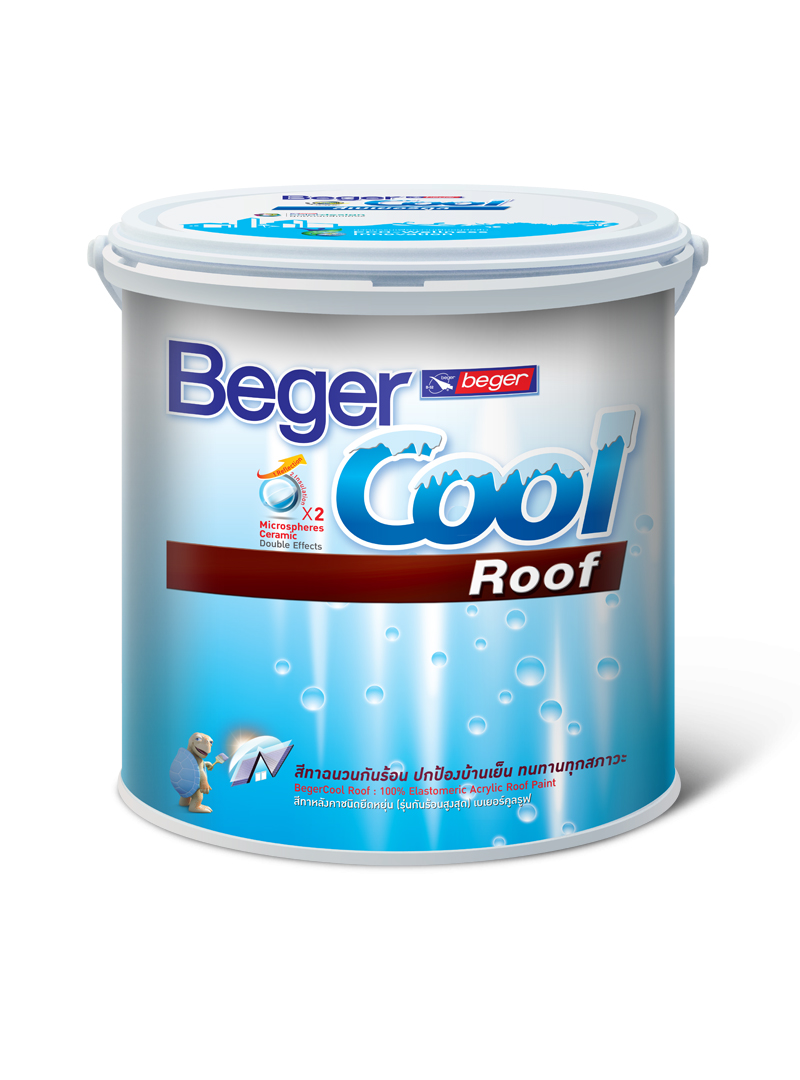
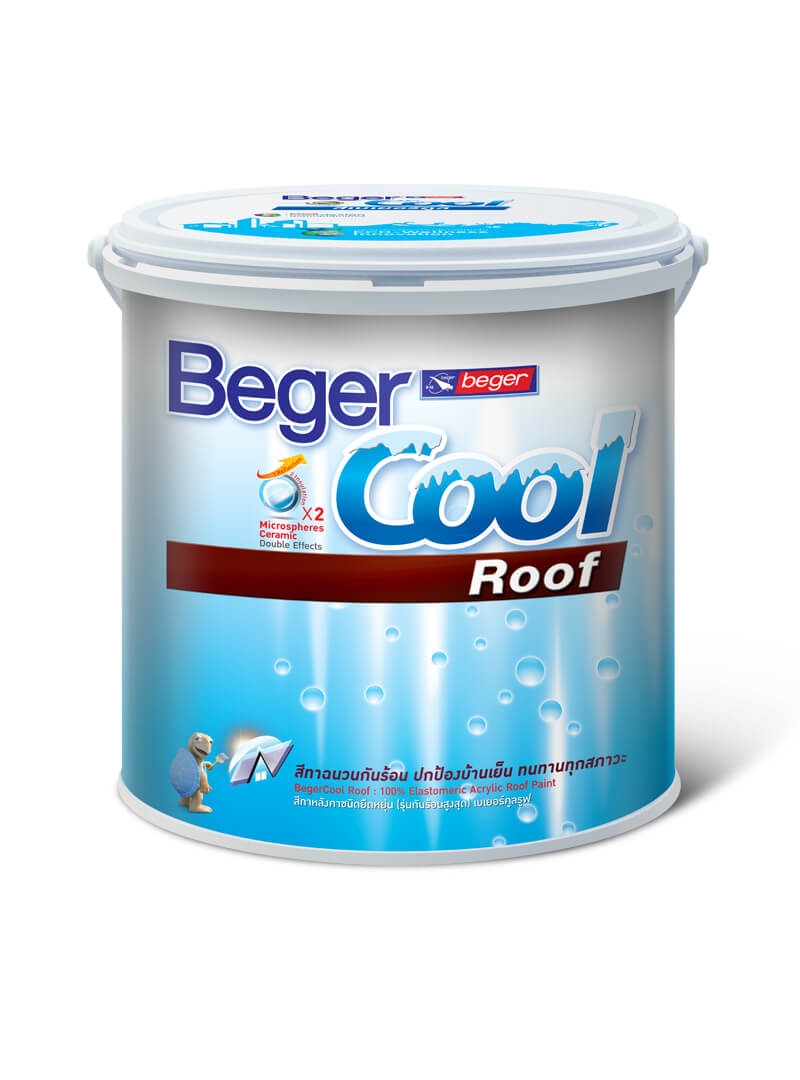
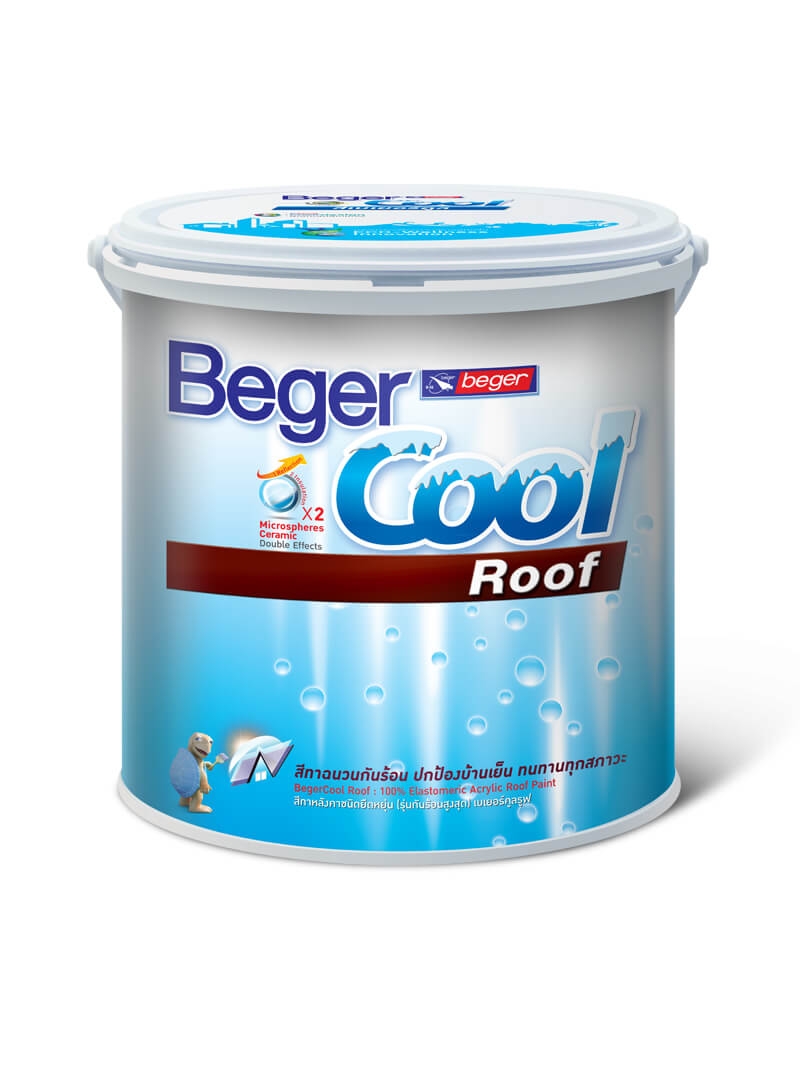
Currently, there are various types of heat-resistant roof paint available, one of which is specifically designed for hot weather: BegerCool Roof (BegerCool Roof) which is a roof paint developed to focus on reducing heat accumulation on roof surfaces and can be applied to both residential homes and agricultural greenhouses.
Key features to know before use
Heat-resistant roof paint is designed to help reflect heat from sunlight, reduce heat accumulation before it enters the building, resulting in lower internal temperatures and increased energy savings. Additionally, the paint film is flexible, accommodating the expansion of roofs in hot weather, which helps reduce the chances of cracking in the long term, while also minimizing noise from rain impact, especially on metal sheet roofs. It can be used on various types of roofs, whether they are double-tile, CPAC Monier, or metal sheets, which can be found in both homes and agricultural greenhouses.
Product Recommendations
|
BegerCool Roof |
BegerCool Roof Primer #7000 |
BegerCool Roof Primer #8000 |
FAQ Frequently Asked Questions about Cool Roof Paint
Q1: Does cool roof paint really help reduce heat?
A1: Yes, it really does help because cool roof paint has the ability to reflect heat radiation from sunlight, which lowers the temperature under the roof, resulting in a noticeably cooler environment inside the house or greenhouse.
Q2: Is roof paint suitable for animal barns?
A2: It is very suitable, especially for chicken and pig barns, as it helps reduce heat stress, allowing animals to eat better and improving the consistency of production.
Q3: How does cool roof paint help reduce electricity bills?
A3: When the roof accumulates less heat, the temperature inside the building decreases, leading to reduced use of fans or air conditioning, which results in lower electricity bills in the long run.
Q4: What primer should be used with BegerCool Roof (BegerCool Roof Primer #8000)?
A4: In cases where the roof is made of metal sheets, it is recommended to use BegerCool Roof Primer #7000, and if it is cement or CPAC Monier, it is recommended to use BegerCool Roof Primer #8000.