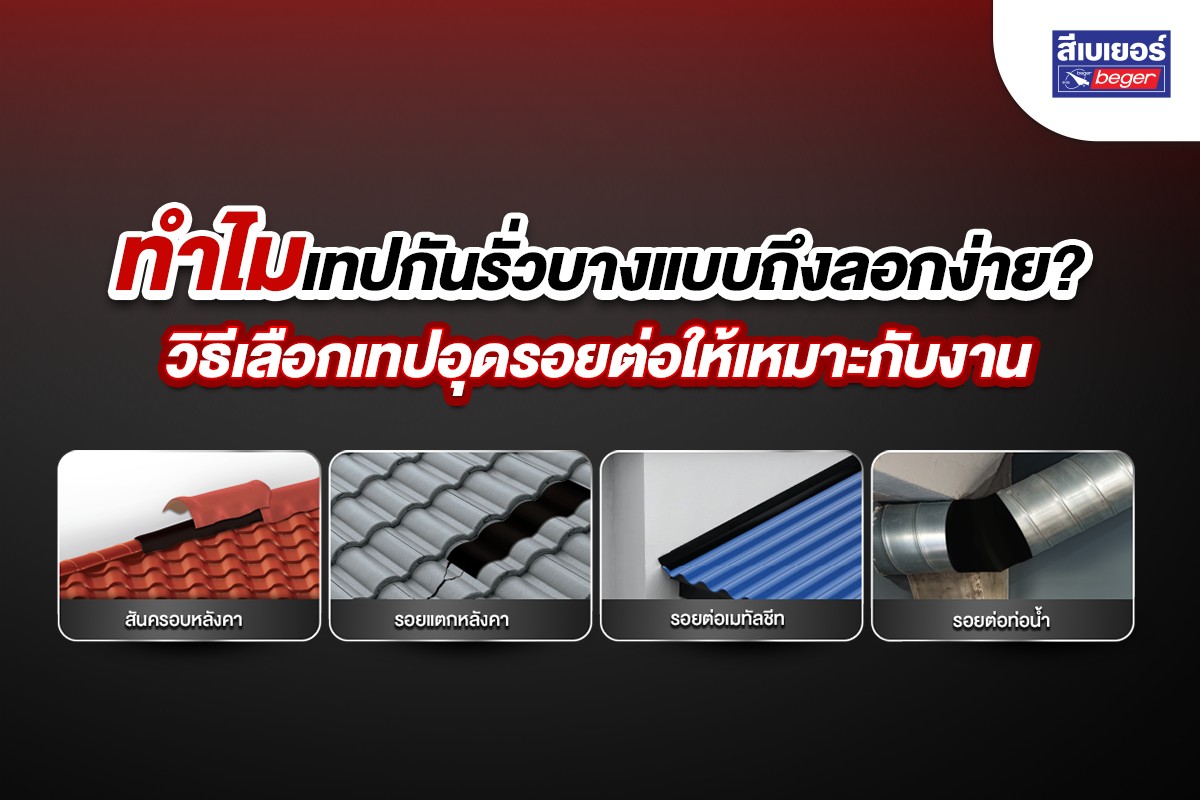
Water leakage problems from roofs, gutters, awnings, or joints between different materials are among the most common issues faced by homeowners. What many people often do is purchase“leak-proof tape”to fix the problem urgently. However, just a few days later, the tape begins to peel, come off, bubble, or crack, necessitating repeated repairs.
The question is…what causes this?
And how to choose the right leak-proof tape that “actually solves the problem”?
This article will explain from the perspective of a leak-proof material expert, helping you understand the root causes of the problem and how to select the right sealing tape for your specific needs.
The reason why leak-proof tape peels easily is that 80% of the time it comes from choosing the wrong type of material.
Many users may not realize that “leak-proof tape” available in the market comes in many grades, from general adhesive tape to high-quality bitumen tape, each designed for different purposes.
1. General adhesive tape is not UV resistant General adhesive tape or cheap DIY tape is often not designed to withstand UV rays, extreme heat, or alternating rain and sun, as experienced in Thailand, causing the tape to peel off easily within a few days.
2. Surface not properly prepared before application Dust, oil stains, cement powder, or wet surfaces can prevent the tape from adhering properly. When exposed to heat and humidity, it becomes even easier to come off.
3. Tape material lacks flexibility When a building expands due to temperature changes, tape that is not flexible enough can “tear or rip,” creating gaps for moisture to seep in.
4. Used on the wrong surface For example, using regular tape on metal sheets, roof tiles, concrete, or PVC pipes, which require specialized materials only.
What qualities should good leak-proof tape have?
To ensure a tight seal and long-lasting use, the correct materials for leak-proofing should have these 6 characteristics:
1. High adhesion to various surfaces such as metal sheets, cement, roof tiles, PVC, aluminum, wood, etc.
2. 100% water sealing without air gaps This is the most important characteristic because small joints are the starting point for water leakage.
3. Heat and cold resistant from at least -20°C to 120°C to prevent softening or becoming brittle in extreme hot or cold weather
4. Highly flexible, not easily torn because buildings expand constantly
5. Easy to use, no special tools required and should be “applied and ready to use immediately”
Bitumen Tape: Reasons why professionals choose it over regular adhesive tape
Bitumen tape is specifically designed for leak repair, unlike regular adhesive tape which is often used for light tasks and cannot withstand outdoor weather conditions. The bitumen material, a blend of asphalt and synthetic rubber, is sticky, highly flexible, and adheres excellently to construction surfaces, whether it’s tile roofs, metal sheets, gutters, or joints of materials that expand significantly.
Key features that make professionals trust it include
- quick and precise sealing of specific leaks
- a foil layer that reflects UV rays, reducing degradation
- sun and rain resistant, does not soften or melt
- long-lasting, requires infrequent repairs
- can be painted over for aesthetic purposes
With these properties, bitumen tape has become the standard material for field leak repairs that require exceptional durability and tightness.
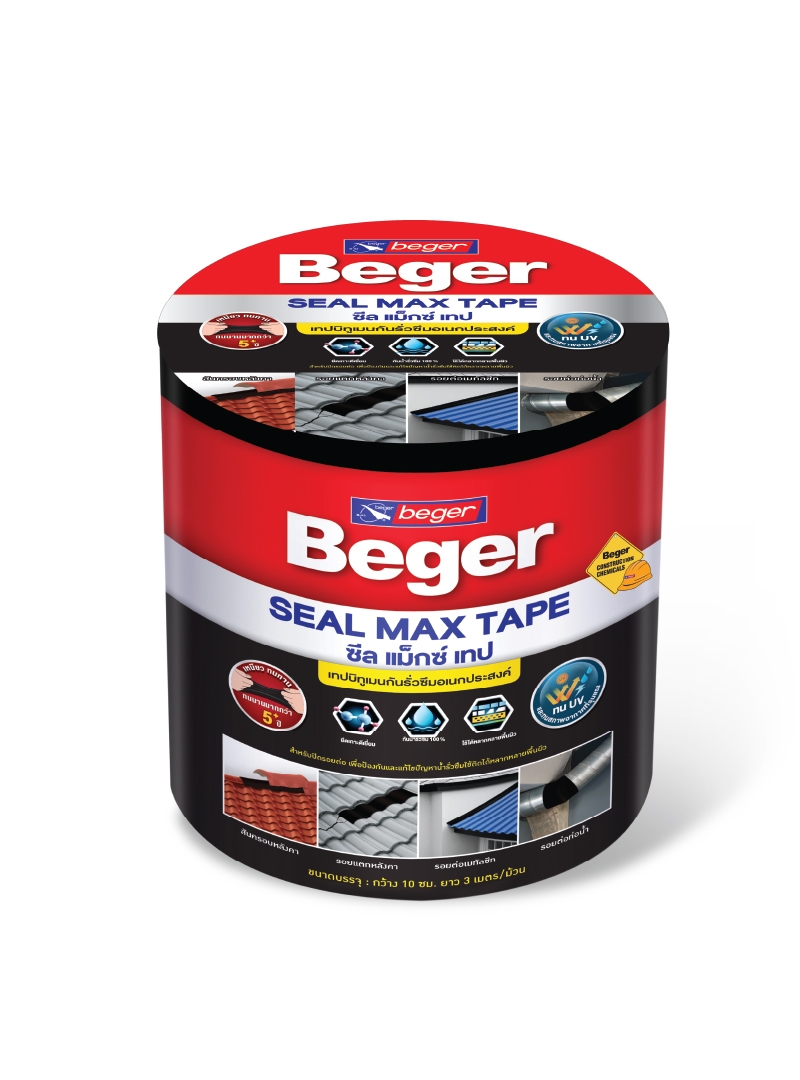
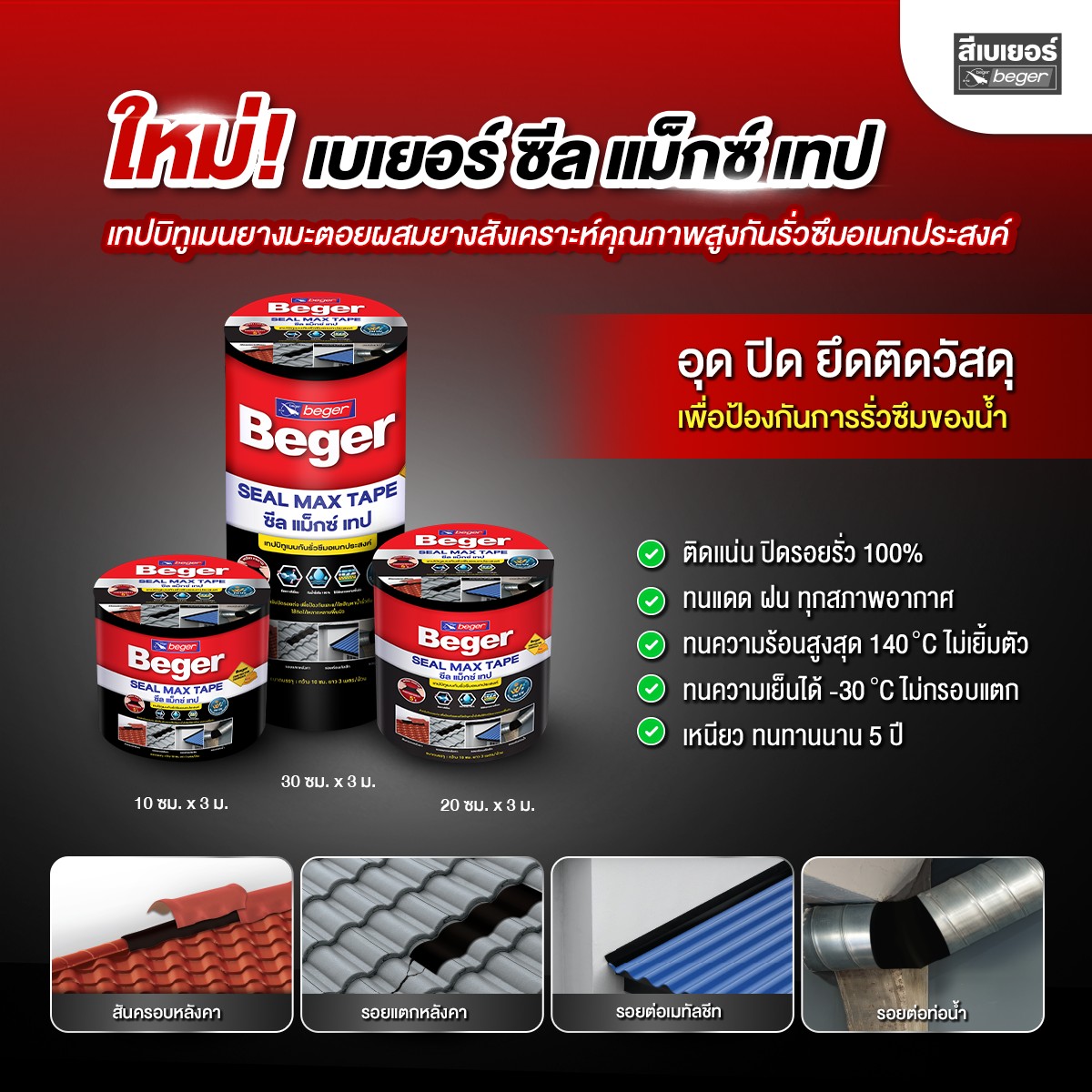
Beger Seal Max Tape: Bitumen tape for real jobs, does not peel easily
Beger Seal Max Tape was developed based on common issues faced by homeowners, such as tape peeling, bubbling, or degrading quickly when exposed to intense sunlight. For this reason, a formula of high-quality Modified Asphalt was chosen, providing excellent flexibility and strong adhesion even in severe weather conditions.
Key features that make this tape suitable for real repairs
- highly flexible bitumen structure, not easily peeled
- aluminum foil surface, helps protect against UV and extends lifespan
- heat resistant up to 140°C, does not soften or flow
- cold resistant to -30°C, does not become brittle or crack
- 100% waterproof Instant and precise leak repair
- Suitable for various surfaces such as roofs, gutters, awnings, metal sheets, PVC pipes, walls, or rooftops
With durability and reliable adhesion, Beger Seal Max Tape has become the choice of professionals for joint repair work that requires precision and long-lasting durability
How to apply leak-proof tape to prevent peeling
- Clean the surface to be dry and free from dust
- Cut the tape to be 1–2 inches longer than the joint
- Peel the backing off in sections
- Apply the tape and press down firmly until there are no air bubbles
- If overlapping is necessary, overlap by no less than 5 cm
- Do not apply in wet areas or during rain immediately after application
Summary: Why does leak-proof tape peel easily?
Because most often “the wrong type of tape is chosen” or used in applications for which the tape was not designed to handle, such as insufficient UV resistance, applying on wet surfaces, or using with unsupported materials. Conversely, if the tape suitable for the job is chosen, such as high-quality bitumen tape that is UV resistant, heat resistant, chemical resistant, and has excellent adhesion it can provide a sustainable solution to leaks without needing repeated repairs for many years
FAQ Frequently Asked Questions about leak-proof tape
Q1: Why does leak-proof tape peel easily?
A1: Most often due to choosing the wrong type of tape, unclean surfaces, accumulated moisture, or using tape that is not UV resistant, leading to brittleness, cracking, or quick peeling, especially for outdoor applications
Q2: How is bitumen tape different from regular adhesive tape?
A2: Bitumen tape has higher adhesion, withstands sun and rain better, and seals leaks more tightly, making it suitable for roofing, gutters, walls, and construction material joints. Regular tape cannot withstand the outdoor weather conditions typical in Thailand
Q3: What type of leak-proof tape is effective for outdoor work?
A3: You should choose high-quality bitumen tape that is UV resistant, heat resistant, non-sagging, non-brittle, and highly flexible
Q4: How should the surface be prepared before applying leak-proof tape?
A4 : The surface should be thoroughly cleaned and dried, free from dust, grease, and powder, and all moisture should be wiped away to ensure the tape adheres best and does not peel off easily later.