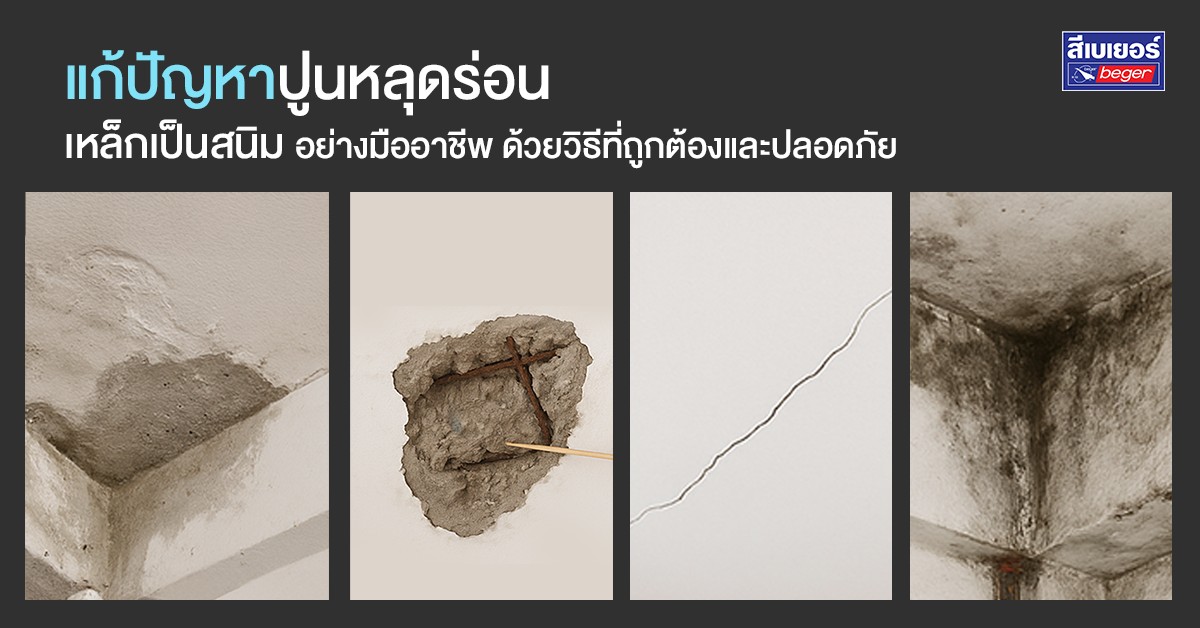
What causes the problem of peeling ceilings?
Peeling ceiling plaster is not just a minor issue but a warning sign of deterioration in the building’s structure, which may lead to long-term safety problems. The main causes are as follows:
Accumulated moisture in the structure
– Water leakage or steam from bathrooms, kitchens, or leaks from the roof causes the reinforcing steel within the concrete to rust (corrosion)
– When rust occurs, the steel expands and pushes the plaster surface off, resulting in cracks and subsequent peeling plaster.
Moisture protection systems cannot effectively control or block moisture
– Incorrect installation of moisture insulation or waterproofing systems allows moisture to infiltrate the internal structure, such as water leaking from the roof or bathroom, mold stains on the ceiling, and plaster peeling off the ceiling due to rusting reinforcing steel.
– This leads to rusting of the reinforcing steel and chemical reactions that cause spalling concrete to occur rapidly.
Low-quality or non-standard construction materials
– Using improperly mixed concrete or choosing cheap materials of low quality
– Lack of rust-proof primer coating from the construction stage leaves the steel unprotected in the long term.
Weather conditions and the age of the building
– Using improperly mixed concrete or choosing cheap materials of low quality
– Lack of rust-proof primer coating from the construction stage leaves the steel unprotected in the long term.
If you notice these signs, you should quickly proceed to inspect and repair immediately with the correct steps and choose to use high-quality rust-inhibiting primer, such as Beger Rust Guard to stop the spread of rust and extend the lifespan of the ceiling and building structure.
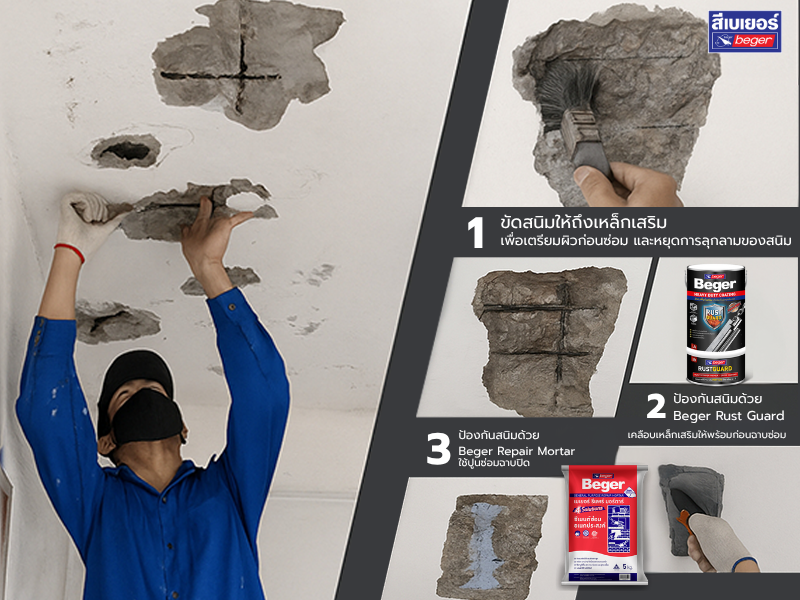
How to properly repair peeling ceilings in 3 steps
-
Sand the rust down to the reinforcing steel– Use tools or a wire brush to sand the surface down to the reinforcing steel to prepare the surface before repair and stop the spread of rust.
-
Coat the steel with high-quality rust-inhibiting primer– To prevent rust from returning, it is recommended to use Beger Rust Guard, a premium-grade epoxy 2K rust-inhibiting primer specifically designed for steel metal, which helps extend the lifespan of the structure, increases adhesion to the mortar, suitable for general home repairs and commercial buildings.
-
Cover the surface with spot repair mortar– After coating the steel that was previously rusty, use spot repair mortar with Beger Repair Mortar, a non-shrink multipurpose repair mortar that can withstand compressive loads well, suitable for repairing structures, columns, beams, finishing concrete surfaces, repairing cracked or damaged plaster, fixing loose tiles, and repairing cracks, chips, and deep holes, with a repair thickness of: 10-30 mm.
Who is it suitable for?
– Homeowners facing issues with ceiling plaster peeling in spots
– Contractors in all areas of Thailand looking for reliable products
– Real estate projects that require long-term durability
Summary
The issue of peeling plaster on the ceiling is not a minor matter. If you are looking for a professional repair method, you should start by properly removing rust, coating with high-quality primer, and using effective spot repair products such as Beger to ensure your home is strong and safe in the long term.
You can purchase Beger Rust Guard and other repair products at a store near you.
Find a retailer near you >> Click here to find a store near me
Contact the Beger expert team for free advice! >> Click to contact an officer