
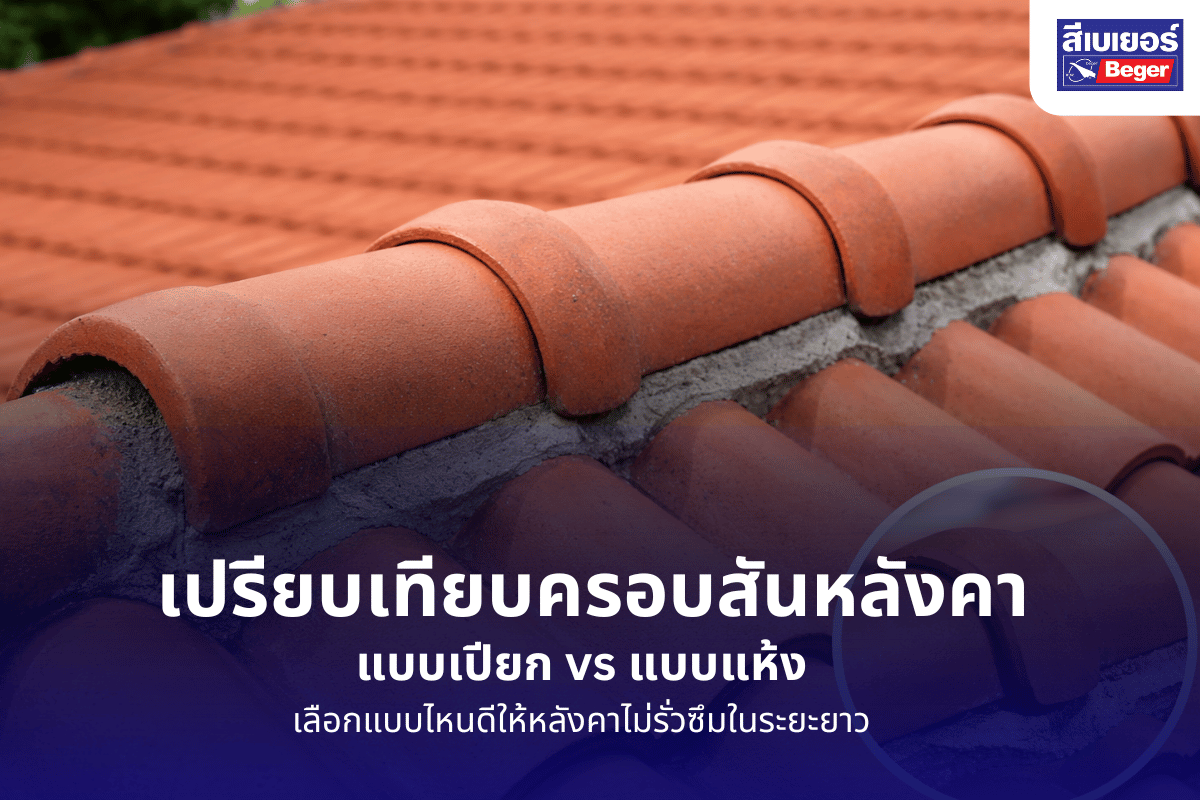
Roof leaks often do not occur solely from the tiles, but the “ridge” or the joint between the tiles is one of the vulnerable points where rainwater can easily seep in (considered a significant weak point of the roof).
Currently, the installation of roof ridge caps is available. 2 main methods It includes
- Ridge cap Wet System
- Ridge cap Dry System
Both systems have advantages, limitations, and are suitable for different types of work. This article will help explain the differences, along with recommendations for choosing what is suitable for homes and the climate of Thailand.
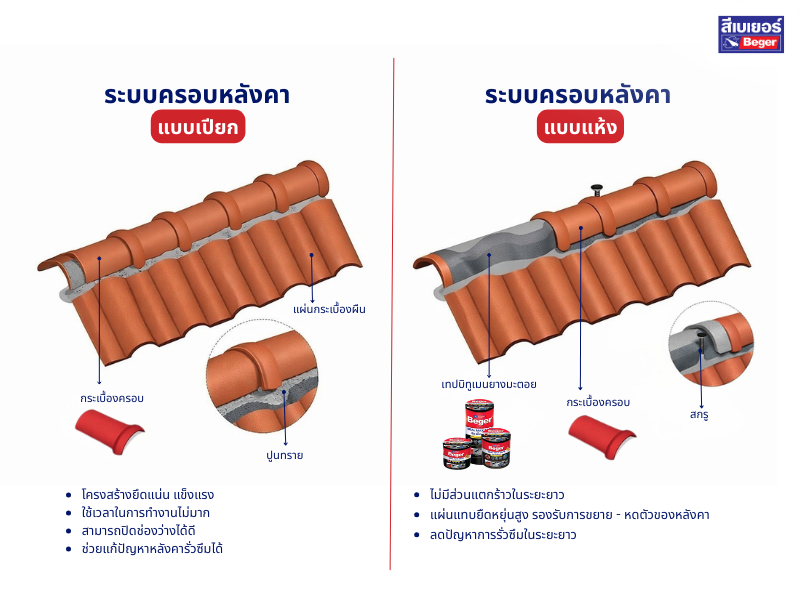
The wet system roof ridge cap installation method uses moisture-containing materials for attaching the ridge cap, which helps create a tight connection between the roofing materials and the ridge cap, improving water leakage prevention.
A wet ridge cap is an installation method that uses cement to secure the ridge cap to the tile line. This method has been used for a long time in construction because it can be easily performed by general workers and uses uncomplicated materials.
Installation Principles
- Place the ridge cap on the junction line of the tiles.
- Use cement to secure the ridge cap.
- Decorative plaster to prevent water backflow.
The advantages of wet roof ridge caps
- Strong and sturdy structure.
- Takes little time to work or is quick by a general technician.
- Can effectively seal gaps.
- Helps solve leaking roof problems.
Limitations
- Cement may crack over time.
- Leakage may occur when the cement expands and contracts.
- Requires long-term maintenance.
Therefore, highly flexible waterproofing materials are often referred to among craftsmen as RoofSeal To help reduce problems and address cracking in concrete, there has been a development of waterproofing materials, specifically PU Hybrid Waterproof, which is flexible and reduces issues with concrete cracking. An example of the material used in this system is Beger RoofSeal Cool, which is a waterproofing material that helps seal joints and enhances water penetration protection at the ridge of the roof.
The dry ridge system is an installation method that uses materials for covering the ridge without the need for water or chemicals during installation, which makes the installation faster and easier. Generally, materials with waterproof properties and weather resistance are used, such as metal sheets or other materials designed for this purpose.
The dry ridge system is an installation method that Not using cement. But use ready-made materials, such as
- Steel frame with a patterned design to support waterproofing material sheets.
- Seal tape
- Curved Ridge Cap
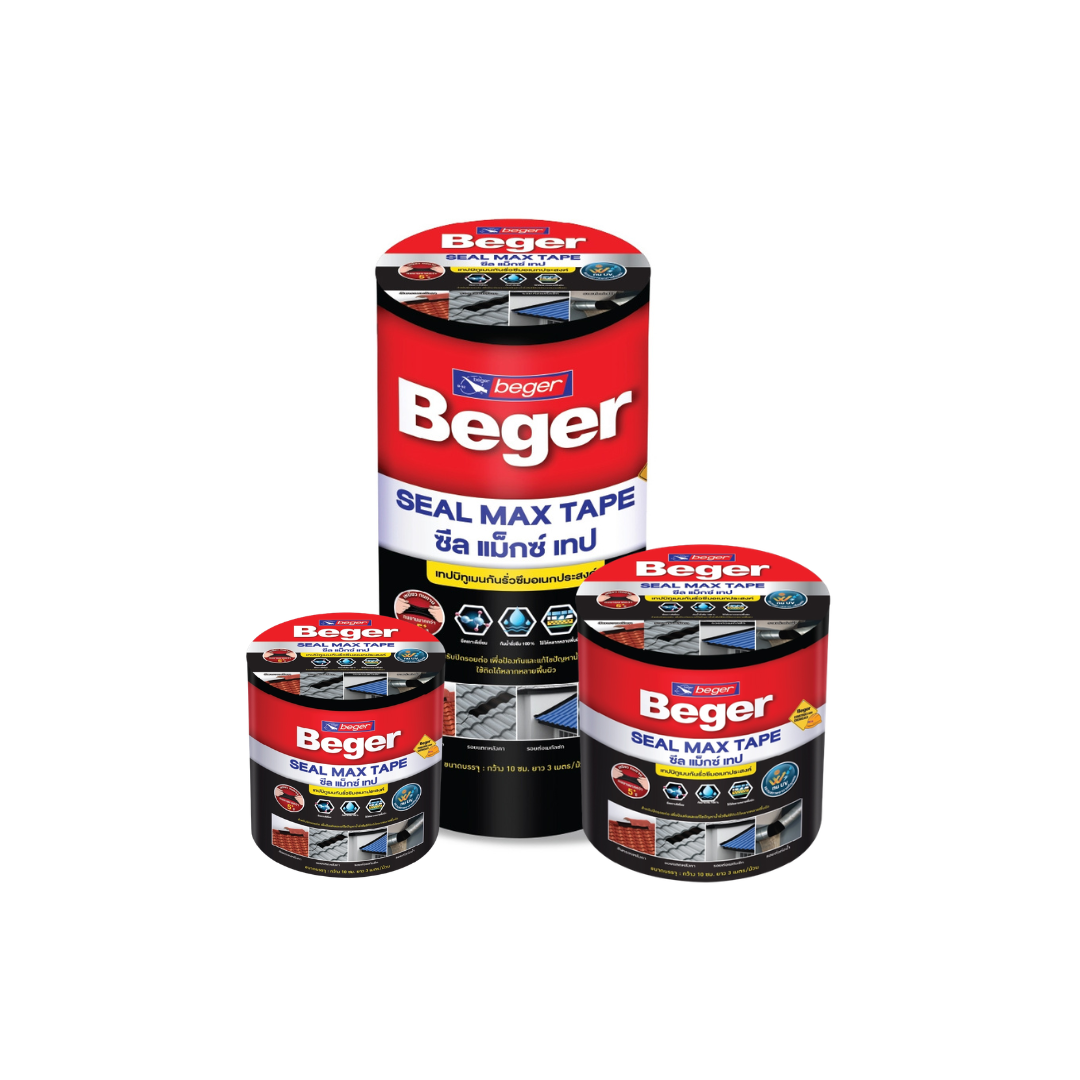
The material will function as Seal joints and prevent water seepage instantly. Examples of materials in this system include Beger Seal Max Tape This is a high-quality bitumen tape for sealing roof joints.
The advantages of a dry roof ridge cap.
- No long-term cracks.
- High flexibility sheet supports the expansion – contraction of the roof.
- Reduce long-term leakage issues.
Limitations
-
You need to use high-quality materials to ensure good adhesion.
-
Complex installation and takes more time than
-
It must be installed correctly to ensure full waterproofing efficiency.
| Topic | Wet Type | Dry Type |
| Installation Method | Use cement together with waterproofing materials | Use waterproof tape with the supporting structure |
| Strength | Strongly bonded with cement | Strong and highly flexible |
| Repair | May require cement repairs | Has a long service life |
| Installation | Takes a long time | Installation is complex |
|
Risk of Cracking |
There is a chance of occurrence |
Almost none |
So which type should you choose?
The answer depends on the characteristics of the house and the problems you want to solve
Should choose the wet type ridge cap
- For new houses using general contractors and existing houses that already have the old ridge cap installed
- Convenient and quick
- Suitable for contractors without skills in dry type ridge caps
Flexible waterproofing materials, such as Beger RoofSeal Cool can effectively seal joints and reduce cracking from weather conditions.
It is advisable to choose a dry ridge cap.
- If you require a higher standard installation than a dry ridge cap.
- If you need a system with high flexibility.
- There will be no issues with cracking in the future.
Materials such as Seal Max Tape can immediately seal joints and prevent water leakage without the need for cement.
Both wet and dry ridge caps have advantages suitable for different types of applications. Wet” is suitable for repair work and structures that require strength, while ” dry” is suitable for installations that require flexibility and reduce the risk of cracking. The most important thing is to choose quality materials and install them correctly so that the roof can protect against rain and weather conditions for a long time.
Recommended Products
FAQ Frequently Asked Questions about wet and dry ridge caps
Q1: What is the difference between wet and dry ridge caps?
A1: Wet ridge caps are an installation method that uses cement or waterproofing materials to secure the ridge cap to the tile line, while dry ridge caps are a system that does not use cement but uses prefabricated materials such as sealing tape or ridge cap fastening devices to seal joints and prevent water leakage.
Q2: Which type of ridge cap is better at preventing water?
A2: Both wet and dry systems can effectively prevent water if quality materials are chosen and installed correctly. The wet system should be used in conjunction with waterproofing materials like Beger RoofSeal Cool to prevent cracking, while the dry system uses Seal Max Tape for water leakage prevention.
Q3: How to fix leaks at the ridge of the roof?
A3: If a leak is found at the ridge of the roof, it can be repaired by checking for cracks in the ridge cap or the cement used in the wet system. Then seal the joints with waterproofing materials for roofing or use sealing tape to close the joints to prevent water leakage.
Q4: Is the dry ridge system durable?
A4: The dry ridge system is highly durable because the materials are flexible, allowing them to accommodate the expansion of the roof structure well, reducing the chances of cracking that are often found in wet ridge systems.
Q5: Is it necessary to use waterproofing materials at the ridge of the roof?
A5: The ridge of the roof is a point with a high risk of leakage because it is the joint line of the tiles. Using appropriate waterproofing materials or joint sealants will help reduce the risk of leakage and extend the lifespan of the roof.