
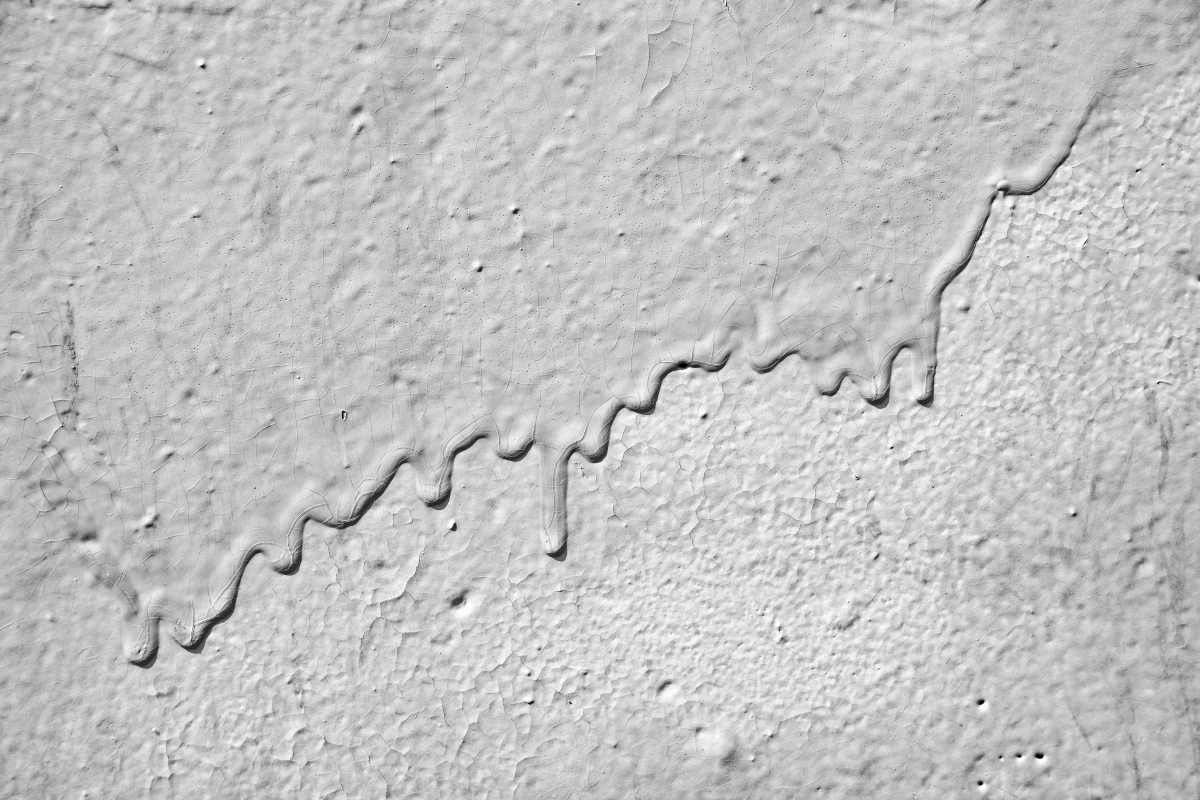
The issue of sagging/flowing paint during application is characterized by paint that does not adhere to the entire surface, causing some of the paint to flow downwards. This is often noticeable when painting vertical walls.
Causes of sagging/flowing paint during application
- Not rolling excess paint off the roller, applying paint too thickly
- Choosing low-quality paint or paint with poor adhesion properties
- Mixing paint with too much thinner or solvent
- Painting on very smooth surfaces without proper surface preparation or using an unsuitable primer
Solutions for sagging/flowing paint during application
- If sagging occurs during application, quickly wipe off the paint or, once dry, sand with wet sandpaper using soapy water and then dry sand (or use an appropriate solvent) to prepare the surface and repaint.
- Avoid using low-quality paint and applying it too thickly; instead, apply thin coats in two passes rather than one thick coat.
- Be careful when mixing paint with thinner or other solvents; it is recommended to use the amount specified on the paint packaging only.
- To prevent sagging on very smooth surfaces, lightly sand and apply one coat of primer first, such as using the high-adhesion formula Beger Rust Gard, and allow it to dry before applying a top coat of glossy oil-based paint or a 2-component Epoxy/Polyurethane system as desired.
- Use 2In1 anti-rust paint that has both primer and topcoat in one, such as BegerShield GRIPTECH 2IN1, by mixing thinner at the specified ratio, or use BegerShield GRIPTECH 2IN1 RustProof formula without thinner.
- Apply the best quality oil-based primer from Beger, such as Beger Water Block Primer B-3100, followed by a high-quality topcoat system for cool houses like BegerCool DiamondShield 15 or BegerShield AirFresh Anti-Virus Gold iON in 1-2 coats.
Consult paint issues for free! Get free house color design services!