Carbon The trending term we hear most often these days is carbon dioxide (CO2) one of the main greenhouse gases causing the world to heat up rapidly. If we continue to let its levels rise unchecked, it will increasingly affect our lives to the extent that some scenarios we thought were only in movies, such as global flooding, loss of life, and homelessness, could become reality. Just know that you are already being affected by it without realizing it.
What causes carbon emissions?
Going back to science class, your teacher once taught that carbon dioxide is a gas produced by the respiration of living beings (humans and animals), but that accounts for less than 1 in 10 of the total gas emissions. So where do the majority of carbon emissions come from?
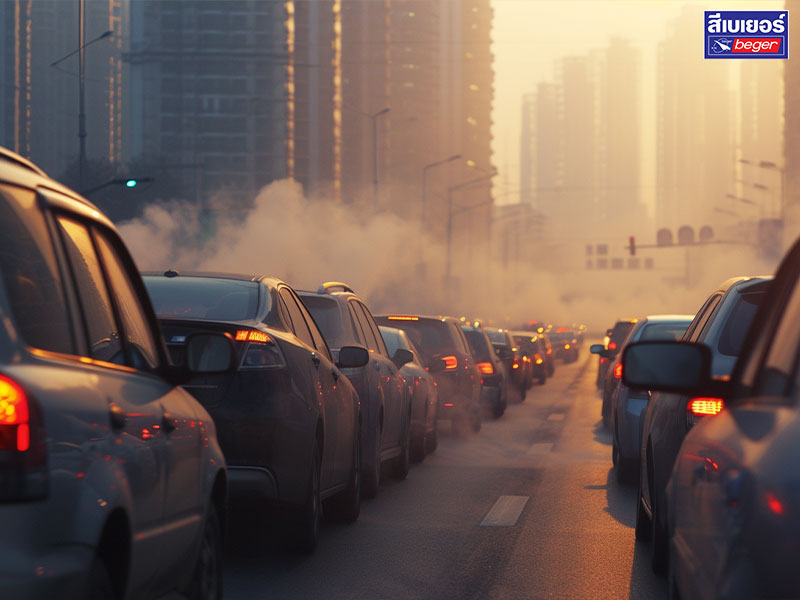
The answer you probably already know: Yes, the main cause of excess carbon in the world is human activity whether it’s the production of various fuels such as gas, oil, electricity, or industrial production that is the number one cause of increased gas emissions, including other behaviors of ours that contribute to carbon production unknowingly, such as driving cars or cooking, etc.
The negative effects of carbon on the world and on you
What impact does carbon have on the world?
1. Global warming and rising temperatures
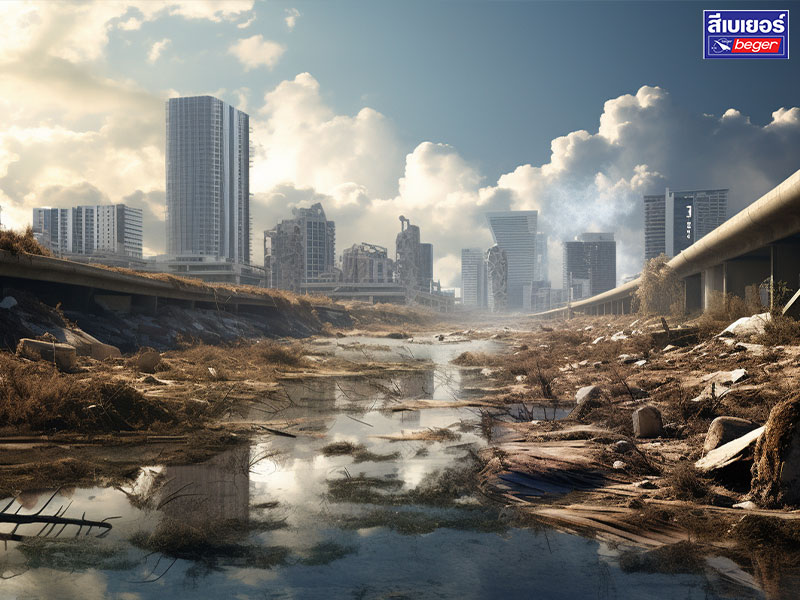
Scientists predict that global temperatures may rise by another 1.5 degrees Celsius by 2027. This number may seem small to us, but for the environment, it is catastrophic because just a 1-degree increase can cause polar ice to melt, sea levels to rise, and it can even lead to the extinction of certain corals, plants, or animals.
2. More frequent and severe disasters
Extreme weather patterns can be seen from the past year with severe issues like storms, flooding, or droughts.
What effects does carbon have on you?
1. More frequent illnesses and increased risk of various diseases
No matter how well we take care of our health, carbon dioxide can still harm us because it acts as a direct and indirect trigger that makes us more susceptible to illness. This is especially true in areas where carbon gas combines with various particles and becomes air pollution (PM), such as in urban areas with stagnant air or industrial zones.
- Respiratory diseases such as asthma, lung disease, or bronchitis
- High blood pressure and heart disease
- Certain types of cancer, such as skin cancer and lung cancer
- Allergies
- Immune system-related diseases
- Heat stroke and others

2. The cost of living is rising
Although it may not be a direct impact, if we trace it back, we can see that carbon contributes to increasing many expenses for us without us realizing it, such as
- rising healthcare costs As mentioned in point 1, when we get sick more often, the costs for treatment also increase.
- the rising prices of consumer goods and necessities This is a result of seasonal fluctuations, where agricultural yields decrease against a backdrop of increasing demand, leading to higher prices.
- higher electricity costs Due to global warming from carbon, the air is getting hotter, so we have to use air conditioning more often, which consumes more electricity.
How to reduce carbon
Reducing carbon, simply put, is about reducing global warming. Currently, there are options for us to work together more. Today, I have some methods that I think are easy to implement, and some may be unexpected.
- Plant trees
- Separate waste so that it can be recycled, or some items we don’t need to throw away because they can be reused.
- Reduce the use of plastic bags and use cloth bags instead.
- Turn off lights and unplug devices when not in use to save a bit more electricity, so we don’t have to produce more (electricity production generates a lot of carbon).
- Install solar panels
- Choose environmentally friendly products
- Choose electrical appliances with Energy Label 5
- Painting
How does painting help reduce carbon?
Not every type of paint can help reduce carbon, but it must be paint that has been certified by environmental institutions, such as BEGER COOL paint, which has received the global warming reduction label, also known as the carbon footprint reduction label, from the Thailand Greenhouse Gas Management Organization. Therefore, you can be confident that when you paint your house and choose BEGER COOL Diamond Shield 15, you are indeed helping to reduce carbon.

From everything mentioned, I hope the frightening picture of carbon has become clearer. I understand that some downsides may seem very distant, but some issues do not need to wait for future generations; you may already be facing them, whether it’s health problems or rising expenses. For this reason, I would like to invite friends to try changing their mindset—not to think that we are reducing for the vast world but to think that we are reducing carbon for ourselves. Perhaps try doing 1-2 things together little by little; it can truly lead to significant changes.