
An old house does not always mean it has to be torn down, as in many cases the “existing structure” can still be developed and improved to make it livable again if one understands how to renovate correctly. This is especially true for those who want to control their budget; renovating an old house on a budget is not about cutting costs aimlessly, but rather about planning to renovate the house effectively by choosing to invest in necessary areas and reducing expenses in parts that do not affect long-term usability.
However, a common problem is spending a large budget but achieving unsustainable results. The house continues to face the same issues, such as cracks, loose tiles, or deteriorating structures, which often stem from starting in the wrong order or choosing materials that are unsuitable for the job site.
Therefore, achieving good long-term results in home renovation does not solely depend on the amount of budget but also on “planning” and “understanding the home’s systems,” from checking the structure, allocating the budget, to selecting materials that meet actual usage needs, in order to truly renovate the house effectively.
This article will help you understand the basics of renovating an old house on a budget, along with guidelines for appropriate budget planning, ideas for effective home improvements, and professional working steps to help you make confident decisions and ensure that this renovation is “worthwhile and completed in one go.”
What should be considered for a worthwhile home renovation?
Before starting the renovation, the most important thing is “to think it through,” as good planning will help reduce redundant expenses and truly allow for a worthwhile home renovation in the long term.
Things to consider:
- Repair the structure before decorative work
- Choose materials suitable for the type of work
- Do not skimp on important areas, such as the structure and waterproofing systems
- Allocate a budget for emergencies of 10–20%
The key concept is “do it once and finish it, rather than repairing multiple times.”

Ideas for renovating an old house on a budget (fill in to avoid empty content)
In addition to repairs, adjusting the overall appearance of the house can help make it look new without a high budget.
- Change the house’s color tone Repainting can instantly change the atmosphere of the house; it requires a small budget but has the most noticeable effect.
- Adjust surfaces and tiles Choose to lay tiles only in necessary areas, such as bathrooms or high-traffic areas, to help control the budget effectively.
- Renovate specific areas It is not necessary to renovate the entire house; choose to focus on specific areas such as the bathroom, kitchen, or living space, which is the most cost-effective way to renovate a house on a limited budget.
- Use materials that “help reduce long-term costs” For example, durable materials that do not require frequent repairs; even though the initial cost may be slightly higher, they are worth it in the long run.
Professional home renovation steps
Effective long-term renovations are not just about following a sequence of steps, but also understanding how each step affects the others. If planned correctly, it will help ensure that the renovation is worthwhile and reduce the chances of having to repair again in the future.
Step 1: Repair the structure before everything else
This is what professionals prioritize the most and is considered the “iron rule” of renovation because the structure is the “foundation” of the entire house. If the foundation is not strong, the work that follows will never last.
Imagine this:
- Repainting a wall with cracks will only lead to it cracking again after a while.
- Laying new tiles on an old, weak floor might cause the tiles to come loose again.
Common structural problems
- Cracks in walls or beams
- Concrete surface spalling or paint film peeling
- Damaged corners of columns/floors or cracked concrete columns
The correct solution
You must repair to “become strong again,” not just cover the surface area.
Recommended use: Beger Repair Mortar a non-shrink structural repair mortar designed to:
- repair cracks, chips, and deep holes
- withstand high compressive strength
- adhere firmly without settling over time
help the surface become “tight, hard, and ready for the next step.”
Step 2: Tiling work (the area where problems most often occur)
Once the structure is ready, the next step that often encounters the most problems is “tiling work.” Although it may seem like a decorative task, it actually requires the correct “bonding system.”
Common problems
- Tiles coming loose shortly after use.
- Warped tiles or hollow sounds (bump in the floor)
- Uneven or cracked tiles after installation
These problems are not caused by the tiles, but by “inappropriate adhesive for the job”
Repair cracked mortar with non-shrink multipurpose repair mortar using Beger Repair Mortar
Professional solution
Choosing the adhesive mortar must “match the characteristics of the job”; the same type cannot be used throughout the house
General work
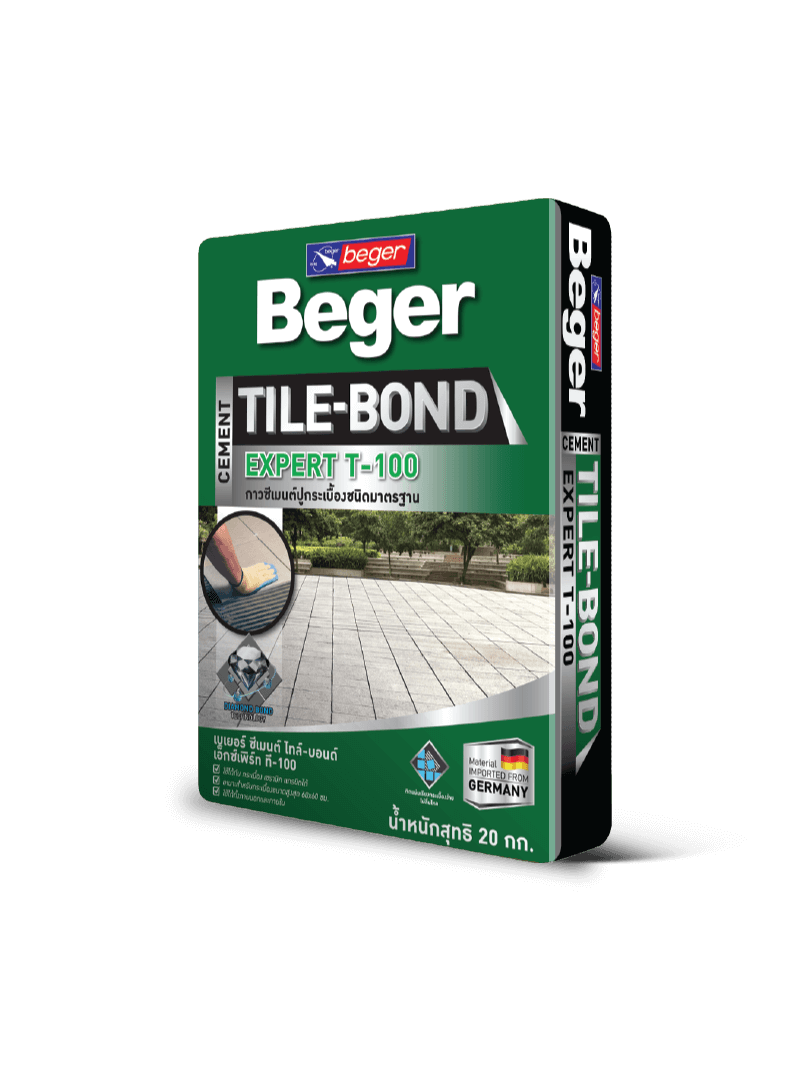
Recommended use: Beger Cement Tile-Bond Expert T-100 Adhesive mortar designed for:
- Higher adhesion than regular mortar (can install floor tiles up to 90 x 90 cm and wall tiles up to 60 x 60 cm)
- Easy to spread, non-slippery
- Suitable for both indoor and outdoor use
Ideal for basic renovation work that requires good value and standards
Heavy-duty / Large tiles
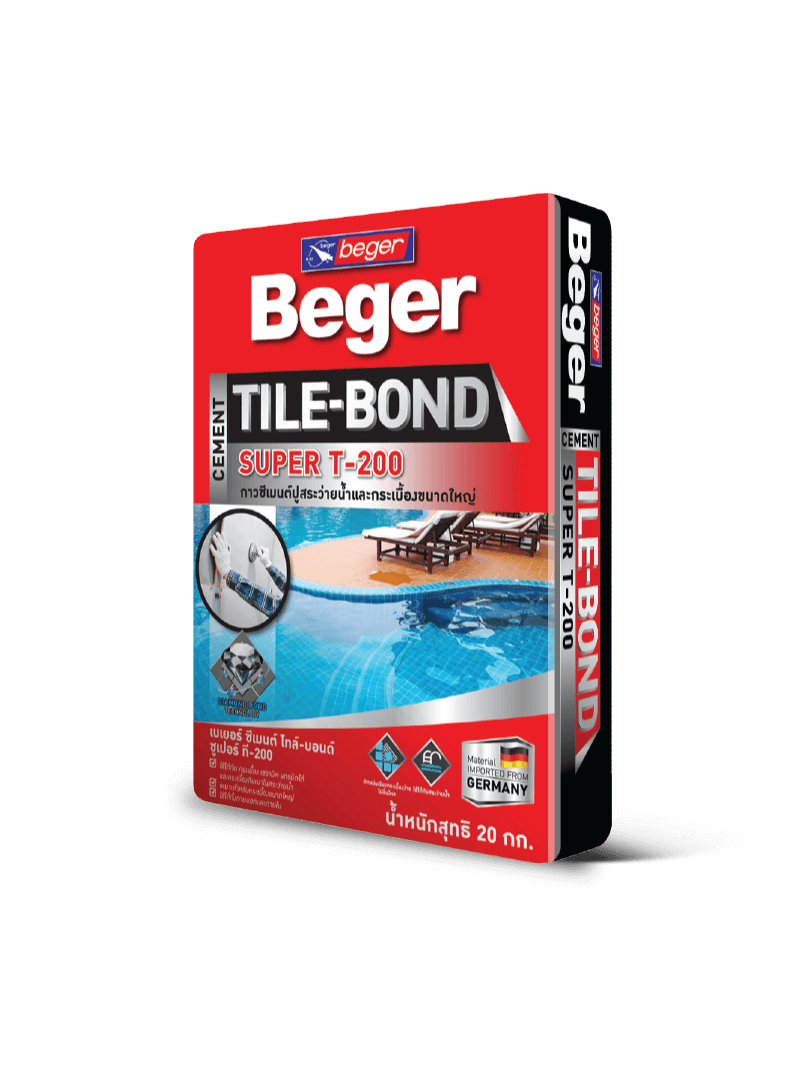
Recommended use: Beger Cement Tile-Bond Super T-200 Adhesive mortar designed for:
- Supporting pool tile installation and large tiles (can install floor tiles up to 100 x 100 cm and wall tiles up to 80 x 80 cm)
- Special sticky adhesive
- Reduces problems of tiles coming loose or warping
Used in areas where “strength and weight” are significant factors
Premium work / Renovation without demolition
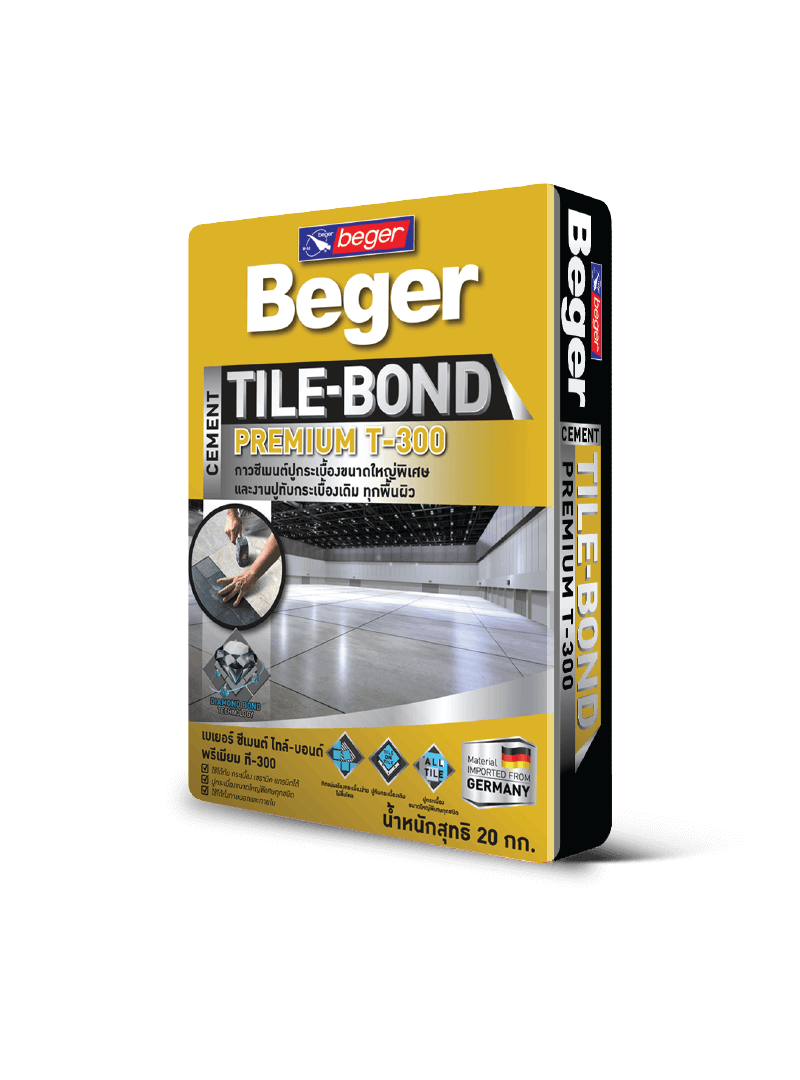
Recommended use: Beger Cement Tile-Bond Premium T-300 Premium adhesive designed to:
- provide the highest adhesion for all types of tiles
- without the need to remove the existing materials
- supports oversized tiles (can install floor tiles up to 120 x 120 cm for both floors and walls)

enhances the integrity of the tiling work with proper “grouting”
While choosing the right adhesive is the heart of adhesion, “grouting” is the important detail that helps complete the tiling system and ensures long-lasting use. Many people often see grout as just a detail work, but in reality, grout lines are the points where:
- water can seep through
- dirt can easily accumulate
- mold and bacteria can thrive
If unsuitable materials are chosen, it may lead to problems such as:
- black stains along the tile joints
- musty odors accumulating
- water seeping underneath the floor
Professional solution (use together to complete the system)
After selecting the appropriate adhesive for each type of work, it is advisable to use high-quality grout in conjunction to complete the tiling system
Recommended to use: Beger Tile-Bond Plus Beger grout formula that inhibits black mold and bacteria helps reduce the accumulation of stubborn stains, effectively prevents water penetration, and is resistant to acids and cleaning agents
Post-renovation care
After completing the renovation, maintenance is important to help extend the life of the home
Should do:
- check for cracks once a year
- Check if the tiles are loose or not
- Clean the surface regularly
Helps reduce long-term costs and truly makes home renovation worthwhile. Renovating an old home on a budget is not measured by spending the least amount of money, but by using money to achieve the highest efficiency in necessary areas, from repairing the structure that is the foundation of the house to selecting materials that are suitable for actual use. What makes renovation “worthwhile and truly completed” is working in an orderly manner, starting with solving internal problems before moving on to external decoration, choosing materials that match the nature of the work, and not overlooking small details that affect long-term durability. When understanding both the causes, solutions, and prevention methods thoroughly, it will be possible to renovate the house cost-effectively. An old house can become strong, beautiful, and livable again without needing to spend excessively, and importantly, “there’s no need to redo it.”
Recommended Products
|
|
|
|
|
FAQ Frequently Asked Questions about Budget Home Renovation
Q1: Where should I start when renovating an old house on a budget?
A1: You should start by checking the structure, such as cracks, concrete surfaces, and the basic systems of the house before moving on to decorative work. If the structure has issues, other work will deteriorate as well.
Q2: What can I do with a renovation budget of 100,000 Baht?
A2: You can improve the basics, such as repainting, repairing cracks, replacing some tiles, or adjusting the usage areas, focusing on work that has clear and necessary results first.
Q3: Do I need to remove the old tiles when installing new ones?
A3: Not necessarily. If the original surface is still strong, you can use high-quality adhesive mortar to lay over it, which saves time, labor costs, and significantly reduces construction waste.
Q4: What should be avoided when renovating a house economically?
A4: You should not cut costs on structural work, waterproofing, and electrical systems, as these parts affect safety and long-term expenses. Choosing incorrectly may lead to repeated repairs and higher costs.
Q5: How can I renovate my house without needing to repair it again?
A5: You should follow the correct steps, from preparing the surface, repairing the structure, selecting appropriate materials, and using standard systems, which will effectively reduce the chances of recurring problems.